

Who Avive Is
Every year, more than 430,000 people in the U.S. experience cardiac arrest outside a hospital — and for decades, the national survival rate has held at a stubbornly low 10%. Avive was founded in 2017 to change that number. The company builds the Avive Connect AED® — the first automated external defibrillator that can alert 911 on its own and share live incident data as it happens — paired with software that turns bystanders, community responders, and 911 dispatchers into one coordinated team acting in the first critical minutes of a cardiac emergency.
Avive’s mission is built around a simple, urgent fact: survival drops 7 to 10% for every minute that passes without defibrillation. Getting a device to a patient’s side in four minutes instead of ten isn’t a marginal improvement — it’s the difference between life and death, for hundreds of thousands of people a year. Today, Avive’s connected AEDs and 4 Minute Community Program are deployed in communities, across with public safety agencies, gyms, universities, school districts, and Fortune 100 companies nationwide, working toward a future where every cardiac arrest has a real chance at a different outcome.
The Challenge
Cardiac arrest is unforgiving on a clock. As Avive CEO Sameer Jafri put it: “In a cardiac arrest emergency, every minute you don’t have a defibrillation delivered to a patient reduces that patient’s survival by about 7 to 10%.” Millions of AEDs are already deployed in offices, gyms, schools, and public buildings across the country — but, in Jafri’s words, “the vast, vast majority of incidents do not actually get an AED to a patient before EMS arrives on scene.”
The core problem wasn’t a shortage of devices. It was that those devices were invisible to the one system that could actually route people to them: 911. Jafri described the gap directly: “Traditional AEDs that are deployed there, no one really knows where they are because they’re not connected. They don’t know if they’re functioning… they don’t know their location.”
Avive needed a partner that could put a connected AED directly into the hands of the one person already coordinating every other part of the response — the 911 telecommunicator — whether that AED was part of a community-wide bystander program or sitting on the wall of a single building.
Why Avive Chose RapidSOS
Ahead of its 2023 product launch, Avive sought a partner that could get its solution in front of 911 centers nationwide, fast. Jafri explained the calculus directly: “At the time, we felt like we needed a partner that had nationwide scale for us to integrate with so that we could deliver our solution to as many communities as fast as we possibly could. And RapidSOS has that — they have nationwide coverage and capabilities, and are well-liked and loved in ECCs across the country.”
Scale wasn’t the only factor. Avive also needed a partner who understood dispatch operations well enough to make the integration something telecommunicators would actually use under pressure, not ignore. Co-Founder and President Rory Beyer framed RapidSOS’s role as foundational to the entire model: “To make the 4 Minute Community happen… it all starts at the 911 center. RapidSOS is the first and sort of critical point before which you can’t have any of this, because that 911 [operator] or dispatcher is the key link that allows this whole process to start.”
The Solution
Avive and RapidSOS support a few distinct ways a connected AED reaches 911 including pathways for communities, public safety agencies, and for the businesses and facilities that own Avive devices.
Use Case 1: 4 Minute Community (Public Safety & CARE Team)
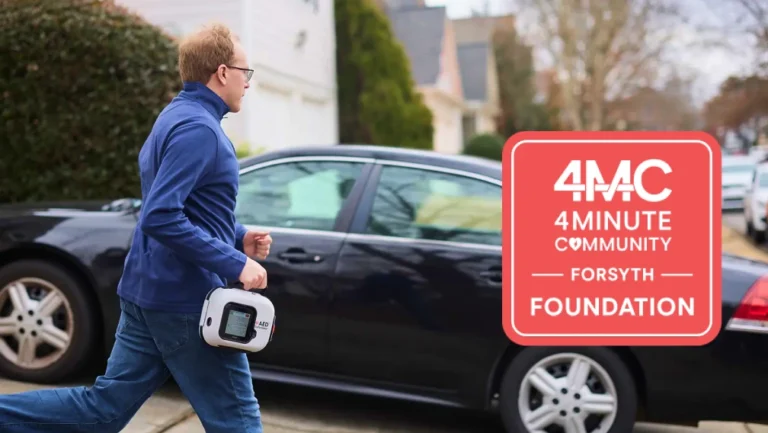
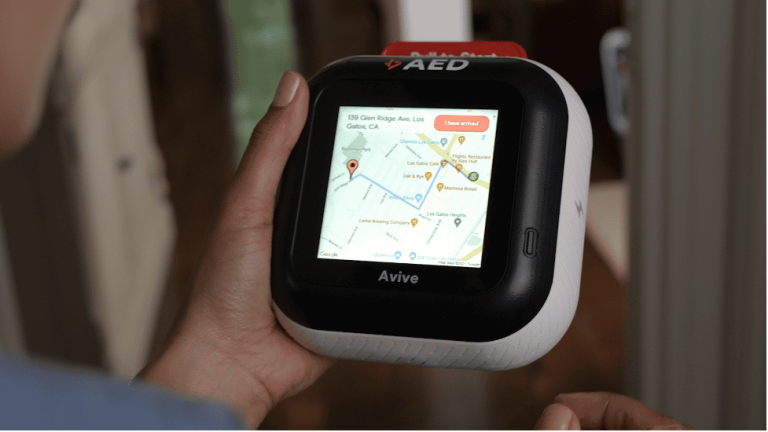
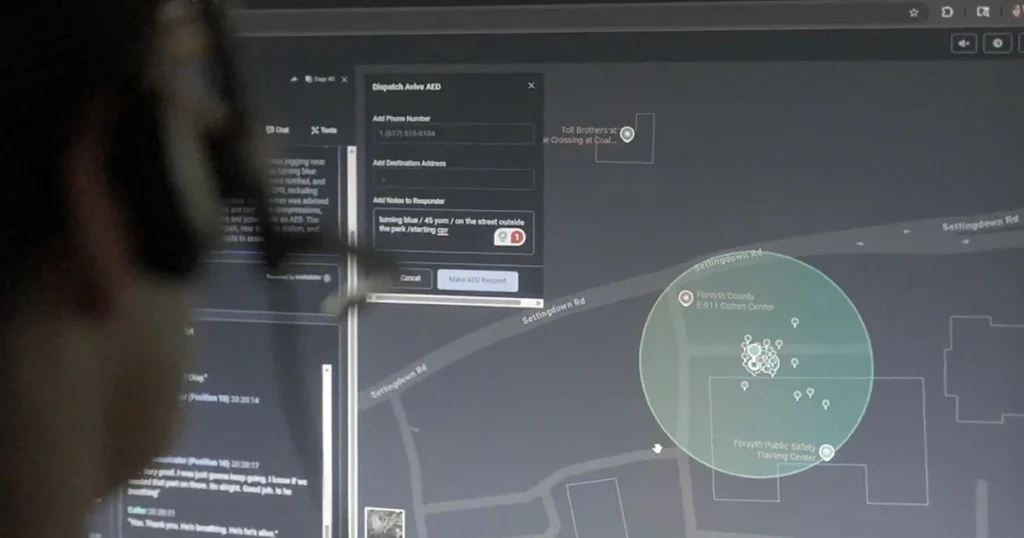
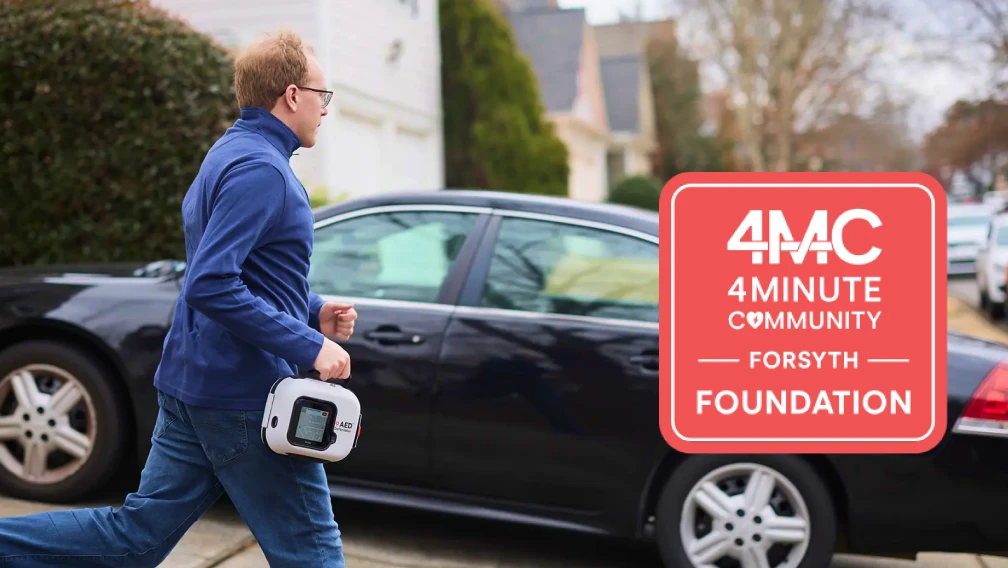
The Avive team works with community leaders, public safety to establish a 4 Minute Community program. With this, 911 dispatchers gain access to proactively push an alert to every connected AED and registered Cardiac Arrest Rapid Engagement (CARE) Team member within a set radius the moment a cardiac arrest call comes in, at the same time EMS is dispatched. The Avive CARE Team is a network of local citizen volunteers equipped with a connected AED who are trained to respond to nearby cardiac emergencies. As Jafri put it, describing what the partnership solved: “Now we could actually give real awareness to a telecommunicator as to where the nearest AED is. We give them the capability to actually activate and alert that AED and send a bystander to the location of a cardiac arrest.”
From the dispatcher’s chair, Emily Straight, Telecommunicator at Forsyth County 911, described the same shift in before/after terms: “Before, we would just send the fire department and EMS and hope they got there fast enough. But now… we can see where these AEDs are in the community and dispatch a citizen responder… in a cardiac arrest, every second counts.”
Beyer laid out the sequence end to end: “It starts with a call to 911, right? To have a recognition of a cardiac arrest and dispatch our AED devices and bystanders to get to the scene, in parallel to law enforcement and EMS getting dispatched as well.” This runs alongside standard EMS dispatch, not instead of it.
On the receiving end, Forsyth County 911 Operations Manager Jill Spence described the operational shift in concrete terms: “Before you had to make phone calls to make sure that somebody was there, but I can literally click a button and then see that that is happening and that we’re making progress. It’s more efficient.”
Use Case 2: Public Access Defibrillation , PAD+ (Public Safety)
Public Access Defibrillation (PAD+) extends the same 911 integration to AEDs already placed in public-access locations such as parks, municipal buildings, schools, and other high-traffic community spaces — without requiring a fully organized bystander network like 4 Minute Community. Once a facility’s Avive Connect AEDs® are connected to the local ECC through RapidSOS, telecommunicators gain the same real-time visibility into device location, status, allowing a 911 telecommunicator to guide a citizen responder to the nearest device the moment a cardiac arrest call comes in — turning devices that were previously invisible to dispatch into an active part of the response.
Use Case 3: QuickRescue™ (Enterprise)
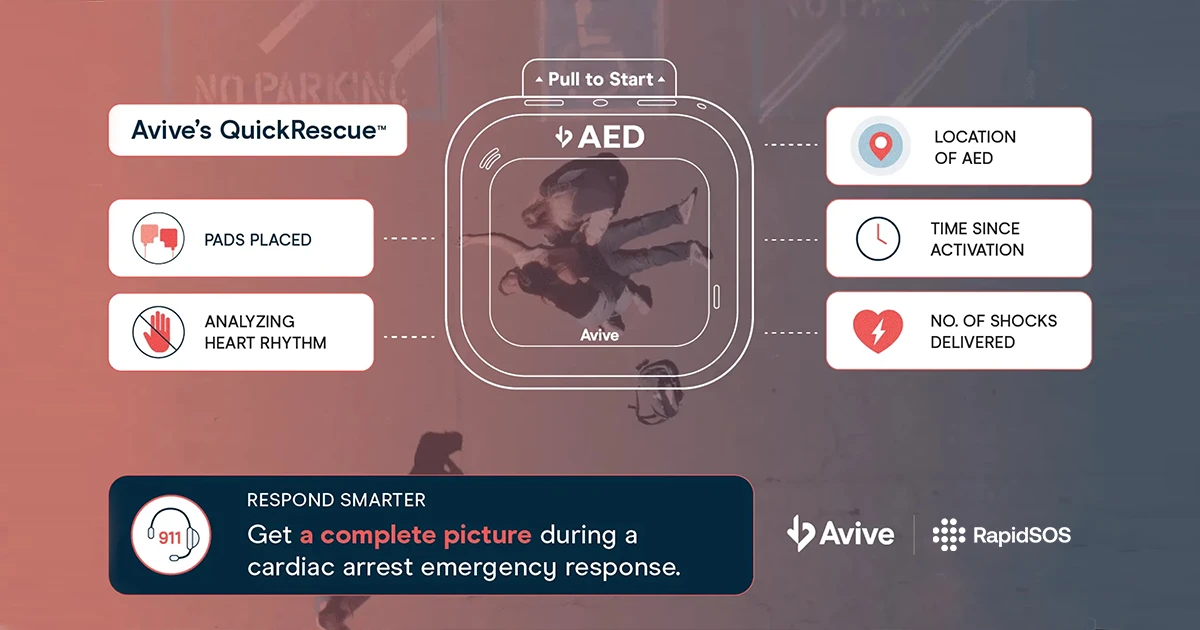
QuickRescue™ flips the trigger. Instead of a dispatcher proactively pushing an alert outward, the AED itself — once purchased and deployed by an enterprise, gym, office, school, or facility — automatically notifies 911 and streams live incident data the moment it’s activated, whether or not the surrounding community participates in 4 Minute Community. That data includes device location, whether a shock has been delivered, and current step in the AED’s workflow, giving dispatchers and arriving EMS crews information they’d otherwise have no way to get before physically arriving on scene.
The Impact
Historically, an AED reaching a cardiac arrest patient before EMS arrived was rare — Jafri has described it as happening in only a small fraction of cases. In Connected Communities using the Avive + RapidSOS integration, that’s changing. As more communities and enterprises come online, telecommunicators are increasingly able to route bystanders to a registered AED in the critical first minutes after a 911 call — turning what used to be a rare exception into a documented, repeatable outcome, with real saves now on record in Georgia, Pennsylvania, South Carolina, Tennessee, and Texas.
More lives saved, community by community. This isn’t a single success story — it’s a different model for cardiac arrest response taking hold, one neighborhood at a time. A device on the wall of a nearby home or business is no longer a passive fixture; it’s an active part of the emergency response the moment a call comes in. Each life saved is proof that a community doesn’t have to wait until EMS arrives — that the nearby community members, equipped with the right technology and the right alert at the right moment, can be the difference between life and death.
Featured story: Forsyth County, Georgia.
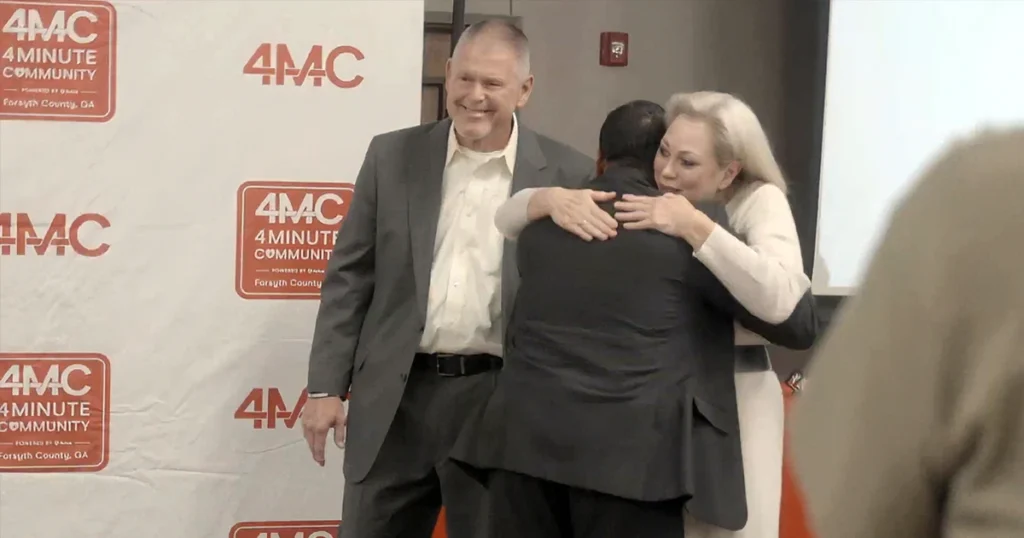
Forsyth sits at the edge of metro Atlanta, where EMS response times in its more rural stretches run longer than in surrounding urban agencies — exactly the gap the 4 Minute Community model was built to close. When a cardiac arrest call came in for a man later identified as Mr. Warren, Emily Straight, Telecommunicator at Forsyth County 911, described how it unfolded:
“It was a typical cardiac arrest call at first — lots of panic, family members trying to do CPR. But as soon as we realized what it was, we triggered the Avive system through RapidSOS. Within seconds, we saw a responder accept the alert. Being able to see that little icon moving toward the house on our map gave us so much hope. We could tell the caller, ‘Help is almost there, a neighbor is coming with a defibrillator,’ and you could just feel the relief on the other end of the line.”
A nearby bystander reached the patient with an AED, multiple shocks were delivered, and the patient survived. Jill Spence, Operations Manager at Forsyth County 911, described what that moment feels like from the dispatcher’s chair:
“When you can see that maybe there is somebody just down the street that can literally walk there in two minutes and help you help your caller, it makes a world of difference as far as stress on us and just the anxiety of, ‘Okay, I’m doing my part. I need somebody to hurry up and get there.'”
Straight, reflecting on the outcome: “It’s a very proud moment for our agency to see a success story like this. Knowing that Mr. Warren is back with his family and gets to see his grandkids grow up — that’s why we do this job.”
For Telecommunicators: A Tool That Turns Helplessness Into Action
Before this, a dispatcher’s only lever in a cardiac arrest call was pre-arrival instructions and a hope that EMS arrived in time. Now they can act directly on the call — activating a nearby AED, notifying a community member, and tracking that response in real time, all while EMS is being dispatched to the scene. Jafri points to what that shift means for ECCs: “They feel like in an emergency where they didn’t have a lot of tools in their belt, they now have a tool. They now have something that can give them hope — and the patient and bystander hope.”
Looking Ahead
Beyer described the current pace of saves as still rare relative to what’s possible: “My hope is that over the next five years, this becomes a regular thing that happens… not on a maybe daily basis, but throughout the year, as opposed to being a really unique, really rare occasion.” As QuickRescue™ extends the model to enterprise-deployed AEDs beyond formally enrolled communities, the two use cases together point toward the same underlying claim: every connected AED, regardless of who bought it, should have a direct line to 911.