

Officer Support Technology
In Riverside, California, a routine day in the ECC turned critical in a matter of seconds. Senior Communications Officer Kimberly Meraz was monitoring radio traffic when Deputy John Barto’s transmission keyed up without a voice on the other end. Her instincts told her something was wrong. After repeated attempts to reach him went unanswered — and even while she was pulled into handling another urgent 9-1-1 call — Meraz never lost focus on the deputy whose silence signaled danger.
When Deputy Barto finally transmitted a distress call, it was clear he was in a physical struggle and unable to relay his location. That’s when Communications Officer Lyndsay Klundt acted decisively.
Within moments, she identified his location in the 1600 block on 6th Street in Corona and relayed the information to nearby units, initiating a rapid, coordinated response.
Just seven minutes after the incident began, officers arrived on the scene, located the deputy, and apprehended the suspects. Without the quick work of the dispatchers in locating him and the coordinated response from the surrounding agencies, the incident could have easily devolved into tragedy.
Meraz shares the importance of not only this teamwork but also the technology that enables her team to respond to incidents like this with such efficiency:
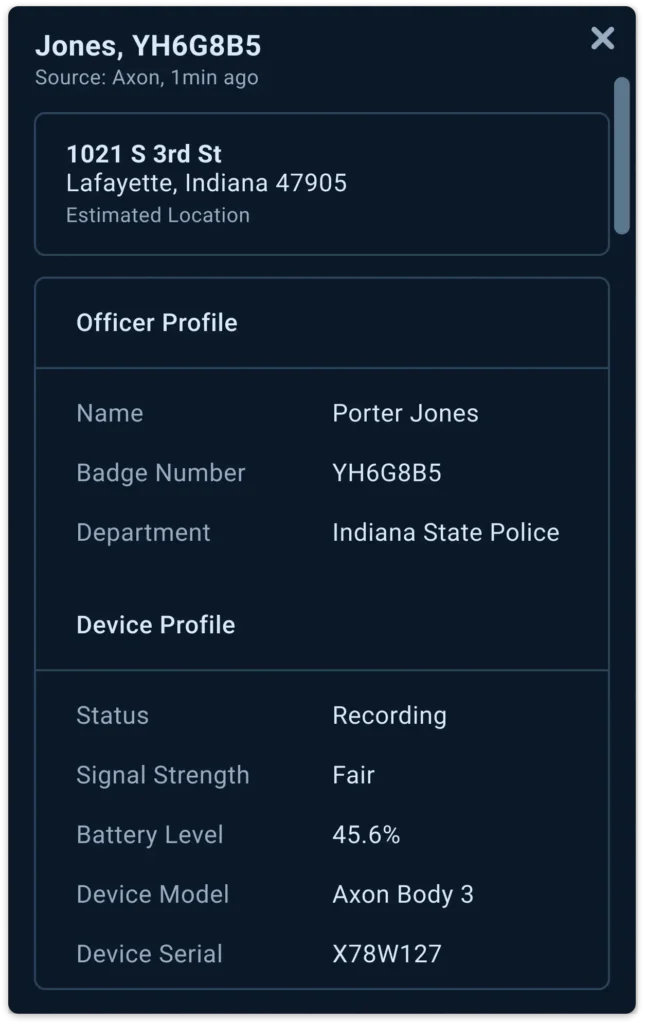
With the RapidSOS + Axon integration, the ECC had real-time visibility into the deputy’s location and movement (including an indicator that his body-worn camera was active) inside UNITE—providing the clarity needed to coordinate a lifesaving response.
As the trusted platform uniting life-saving integrations and real-time data, RapidSOS gives 911 professionals like Meraz and Klundt the tools they need to protect responders in the field. Location is only one piece of the puzzle. With access to live video, body-worn camera integrations, drones, sensors, and more — ECCs gain the full picture they need in the moments that matter most. That visibility means faster action, smarter resource deployment, and above all, safer outcomes for officers and the communities they serve.
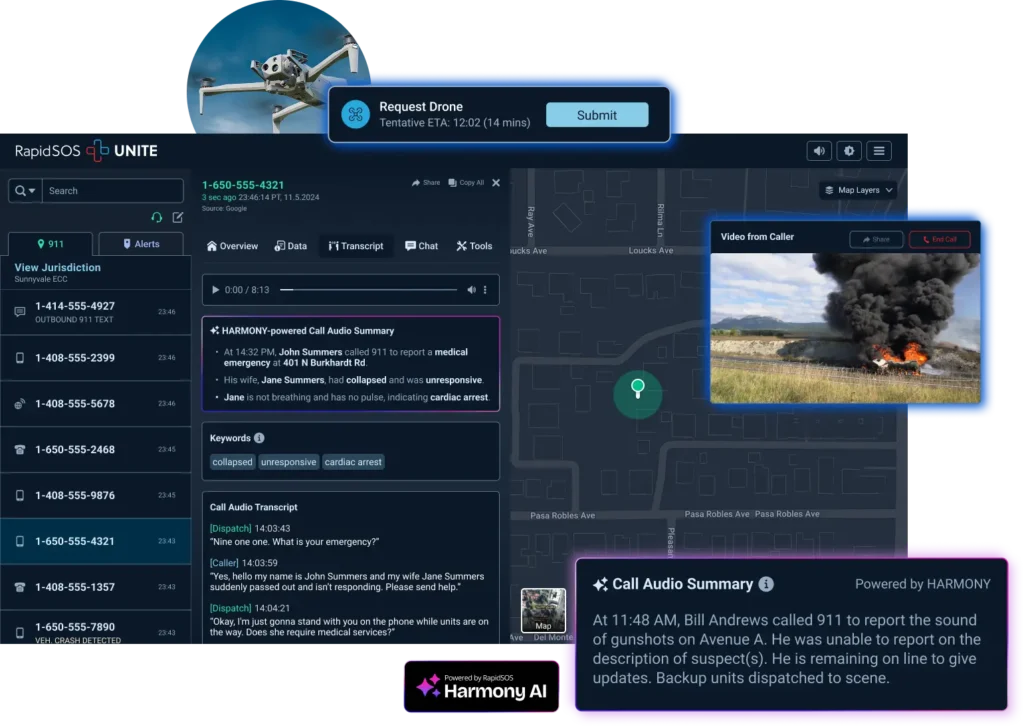
Without real-time connections, critical details slip through the cracks between 911 dispatchers and officers in the field. The cost isn’t measured in minutes — it’s measured in lives. Delays and blind spots turn fast-moving incidents into life-threatening crises, escalating risk for both responders and the communities they protect. Every second without a complete picture is a second where safety can be lost.
Even in jurisdictions with a real-time crime center (RTCC), agencies often struggle with fragmented data coming in due to legacy connections to siloed 911 systems, compromising officer safety and the ability to respond effectively. The real pain isn’t just a lack of efficiency — as COs Meraz and Klundt and Deputy Barto can attest to, it’s the stress, anxiety, and danger of not knowing what’s going on.
To help them see the full picture, public safety relies on the RapidSOS UNITE intelligent safety platform. UNITE uses AI and advanced technology to synthesize information from 210+ data partners, providing critical insights in one, unified view of an incident. By integrating the emergency response center and the officers in the field, UNITE ensures a faster, more coordinated, and safer response from the very start.