

Technology is now critical to the ability of global security operations centers to protect their companies’ employees, customers, and assets.
These in-house safety professionals no longer watch video streams for abnormal or emergency situations. Increasingly, their job requires analyzing data feeds from new digital safety solutions, like Internet-enabled cameras, sensors, and wearables, now serving as the front-line defense. And it’s no longer siloed by facility, region, or time zone. Security is now a 24/7 operation, with different teams worldwide working in tandem to safeguard increasingly complex and dangerous environments.
To address the rising challenges to safety, enterprise safety and security teams need access to a single source of intelligence based on unified data from all these different technologies. Instead, organizations struggle with significant knowledge gaps caused by isolated technologies that undermine security and increase business risks.
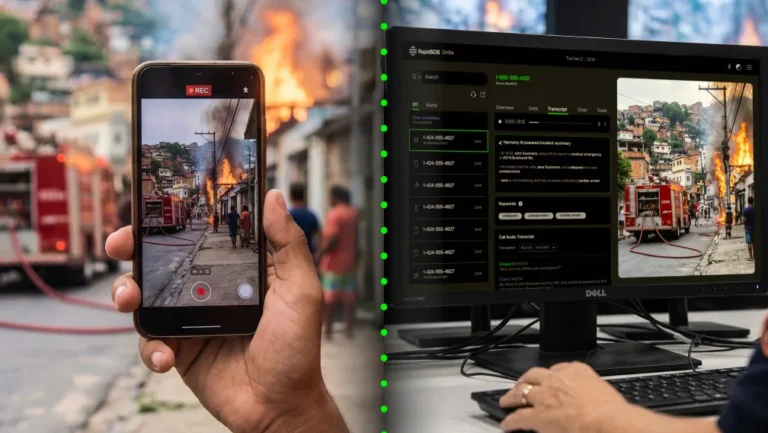
Safety is now a data problem. New digital solutions aren’t connected, creating silos that prevent businesses from harnessing the collective power of their investments to improve safety. It’s not just internally, either. Divisions between IT environments prevent real-time 911 alerts from reaching enterprise safety and security teams.
We call this the Safety Gap. This chasm makes it impossible for in-house experts to get a clear-eyed, real-time operations assessment. Instead, overwhelmed with many different bits of information, they’re forced to analyze each separately. In an emergency, this wastes valuable time and injects unnecessary chaos into already high-risk situations. It also makes it harder for understaffed internal security teams to detect threats proactively.
Enterprise safety and security teams need the right intelligence at the right time. This is how companies mitigate emergencies faster and prevent them from escalating.
Missing the links
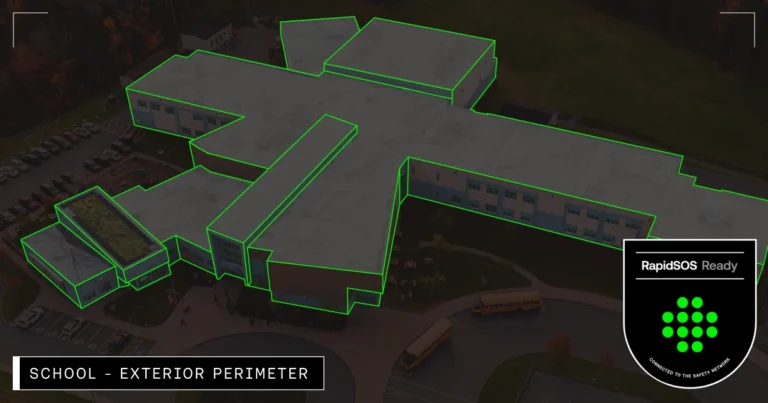
Rarely do companies rely on just one piece of technology for all their safety and security needs. Instead, different systems must work together to give enterprise safety and security teams the holistic view they need. Sensors might detect movement, cameras visually monitor spaces, and “smart” ID cards ensure security.
While each of these tools helps improve safety independently, it truly takes all three working together to drive the maximum benefit from these investments. If each of these ecosystems is siloed, Enterprise safety and security teams may not see simultaneous activities that would indicate an emergency together.
For example, in the wake of a slew of horrifying shootings, retailers are increasingly relying on technology to help protect their employees and customers. But if these alerts don’t reach corporate safety and security teams in time, they can’t act.
And it’s not just internal coordination. During emergencies, first responders rarely make use of the potentially hundreds of security cameras monitoring corporate facilities. This potentially life-saving information is inaccessible because in-house teams and 911 centers aren’t digitally connected. Or consider that, of the over 100,000 heart attacks in the U.S., more than 10,000 occur while someone is at work. If the employee or colleague calls 911 on their personal mobile phone instead of alerting corporate security, enterprise safety and security teams are often kept out of the loop entirely.
In each example, the emergency response could have been improved, or the situation could have been avoided entirely if internal experts had real-time access to necessary intelligence and were connected to the correct external ecosystems. With a single platform unifying data from all the new digital solutions, enterprise safety and security teams can generate the collective insights that ultimately help turn safety into a value driver for the business. The new proactive approach to security can drive financial and reputational benefits, including better customer and employee loyalty and more stable operations.
Check out our recent report to learn more about the challenges caused by the Safety Gap and how enterprises can close it.