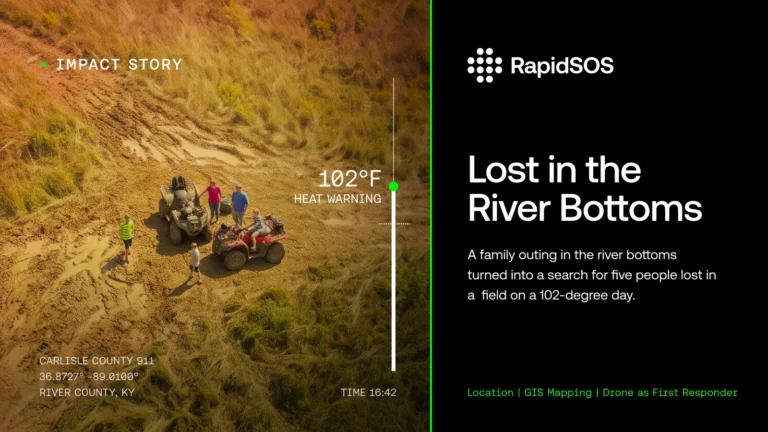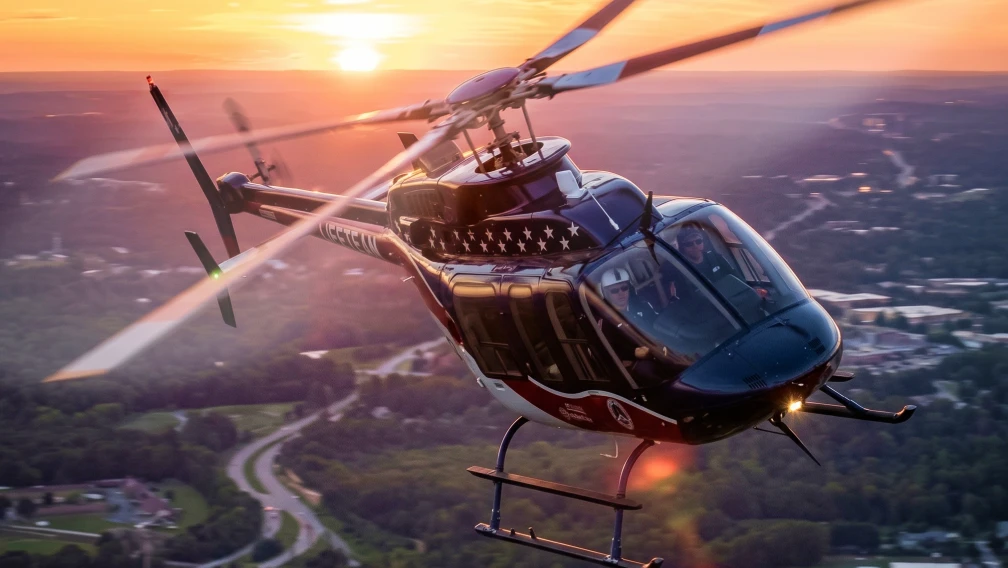
On April 8th, 2026, a sheriff’s deputy in a rural stretch of western Kentucky found a car that had rolled off the road into a ditch. No one was standing nearby — but inside, behind the wheel, was the driver. EMS arrived, found a compound fracture, and knew immediately this patient needed air transport.
Larry Fraser, director of the county’s 911 center, happened to be covering the console that day. He opened the RapidSOS Resource request center, relayed the request, and had an accepted air ambulance en route to the scene in under five minutes.
I was connected with air medical within a matter of seconds,” Fraser said. “As soon as we started the request, they started answering… I would say from the time that we started the request via RapidSOS, to air medical accepted and got headed this way, it was less than five minutes.”
The Old Way: A 1-800 Number and an Internet Explorer Download
Before RapidSOS, requesting air transport in Fraser’s center meant one of two things: dialing a 1-800 number and working through language prompts before reaching a live person, or launching a separate app that had to be downloaded through Internet Explorer — a second system, a second login, and a noticeably longer question set than what RapidSOS asks today.
The friction was enough that many dispatchers skipped the app entirely and just called instead. “A lot of our dispatchers did,” Fraser said. “They would skip the mobile app that air medical supplied to us.”
That changed once RapidSOS was in place. Fraser points to one of his dispatchers — 65 years old, and by her own admission “a little technology challenged” — who now uses the RapidSOS Resource request center, herself and calls it simple. It’s a small detail, but it speaks to a real divide in 911 centers between dispatchers who grew up with this technology and veterans who didn’t. A tool that works for both isn’t a given.

One Touch, Live Updates
For a 911-originated call, the request center preloads the scene’s coordinates automatically, giving the center a starting point before a single question is asked. From there, dispatchers move through a short set of fields — location or LZ (the county has pre-set landing zones), call type, injuries, responding units, and the EMS radio channel — while the request center checks weather and pings the nearest air medical station in real time.
That real-time visibility matters even when the answer is no. About a month prior to the April 8th call, Fraser requested air medical for another incident and watched the request automatically route through all five regional stations as each one declined for weather. “It went around to all five of our air vac stations within a matter of minutes,” he said. “If we had called somebody in the old days, they would actually have to call each station, let them check weather, call me back… it would take quite a while to know if you could get air medical launched.” Fraser estimates that process could once take upwards of ten minutes; now it resolves in a few.
Once a flight is accepted, Unite keeps updating ETA in real time, so ground crews asking “where’s our helicopter” get an answer by glancing at a screen instead of a callback. Fraser and his team can also share a tracking link — not just with responding EMS, but with patients’ families, so they can watch the aircraft’s progress and see if the destination hospital changes mid-flight.
Fraser recalls a family incident years earlier, long before any of this technology existed, when a relative was being flown to a hospital and the destination changed mid-transport due to complications. The family ended up waiting at the wrong hospital with no way to know what had happened, until they called the original dispatch center for an update. It’s the exact gap the tracking link now closes.
The Result
For this center, the impact of RapidSOS isn’t about any single dramatic save — it’s about a changed workflow: gone are the redundant questions, the serial phone calls between stations, the callback loop just to check status, and the blind spot families used to sit in. What used to take upwards of ten minutes of manual coordination now resolves in minutes, sometimes seconds.
Asked what he’d tell other 911 centers that have access to this kind of technology but haven’t adopted it yet, Fraser didn’t hesitate: “I’d say they’d be silly not to have these apps available to them, because it cuts down on response time in case of critical emergency when you’re launching air medical.”
Connectivity saves lives
See How RapidSOS can reduce your air transport request workflow