


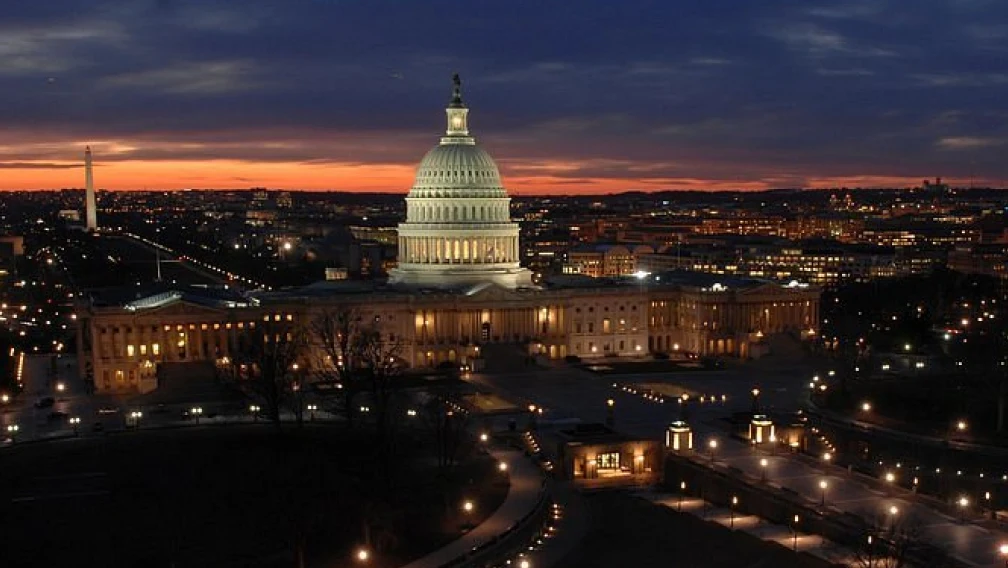

Every year, hundreds of 9-1-1 professionals travel to Washington, D.C., to do something that doesn’t show up on a CAD screen and doesn’t make headlines — but shapes everything that follows.
9-1-1 Goes to Washington brings emergency communications leaders face-to-face with lawmakers and federal officials to address the most pressing issues impacting 9-1-1. It is where policy meets practice. Where real-world experience informs national decisions. Where the voice behind the headset speaks directly to the people writing the laws.
The Senate has unanimously passed legislation to reclassify 9-1-1 telecommunicators as public-safety personnel — a long-overdue recognition of the critical role they play in emergency response. The bill now awaits action in the House. That makes this visit to Washington more than symbolic. It makes it pivotal.
RapidSOS is building the world’s largest Safety Network — where real-time data from hundreds of millions of devices, global enterprises, and thousands of agencies fuels intelligence for emergency response.
This network is real. It grows with every new connection.
But the network isn’t powered by data alone. It is strengthened by the decisions, leadership, and advocacy that shape how emergency response operates nationwide.
It is:
-
The telecommunicator receiving data, making critical decisions, and dispatching the right responder.
-
The ECC director selecting the tools and technology that best support their team and community.
-
The enterprise partner connecting devices and systems into the network to expand real-time visibility.
-
The policymaker advancing legislation that strengthens recognition, funding, and modernization across 9-1-1.
When 9-1-1 professionals engage directly with lawmakers, they are reinforcing the foundation that allows the Safety Network to function at scale.
Because a stronger network requires more than connections.
It requires alignment.
It requires recognition.
It requires policy that supports the people at its core.
We attend 9-1-1 Goes to Washington to listen.
To hear from agencies across the country about what is working, what is not, and what must change.
To better understand the legislative realities shaping emergency communications.
To stand alongside the community during historic moments like the advancement of telecommunicator reclassification.
The future of 9-1-1 is not built by a single company, agency, or branch of government. It is built through collaboration across the entire ecosystem.
That ecosystem — from the call taker to Capitol Hill — is the Safety Network.
And when the voices of 9-1-1 are heard in the nation’s capital, the entire system grows stronger.
We are proud to support that work.
We are proud to listen.
And we remain committed to building a future where every emergency communications professional has the recognition, resources, and tools they deserve.