

Businesses all share a joint mandate: protect their employees, customers, and assets. But while every company proclaims to care about safety, there are huge discrepancies in what that means in the real world. While researchers found that 94% of enterprises consider safety a core value, only 17% have made it part of their business strategy.
It’s a missed opportunity. In today’s world, safety can be a competitive advantage for a business – or lead to significant reputational challenges. Increasingly, customers reward organizations that prioritize it and punish those that don’t. Even global regulators are paying attention on companies failing to maintain adequate consumer and worker protections. Whether it’s a plane, a train, or a self-driving automobile, there’s little appetite for organizations that appear to jeopardize safety.
Some simply under-invest in corporate security and safety teams, the nerve centers that oversee safety across thousands of retail locations, manufacturing plants, or miles of railway. And many others fail to take full advantage of the digital tools designed to help enterprise security and safety teams take a more proactive approach to safety. Instead, technology silos prevent the right intelligence from reaching the right people at the right time.
We call this the Safety Gap. As emergencies become more common, those who close this chasm and operate with safety as a core value will reap the benefits, including better customer loyalty and increased revenue. Here’s how companies can empower enterprise security and safety teams and solidify safety in operations.
Technology is essential, and integration is critical:
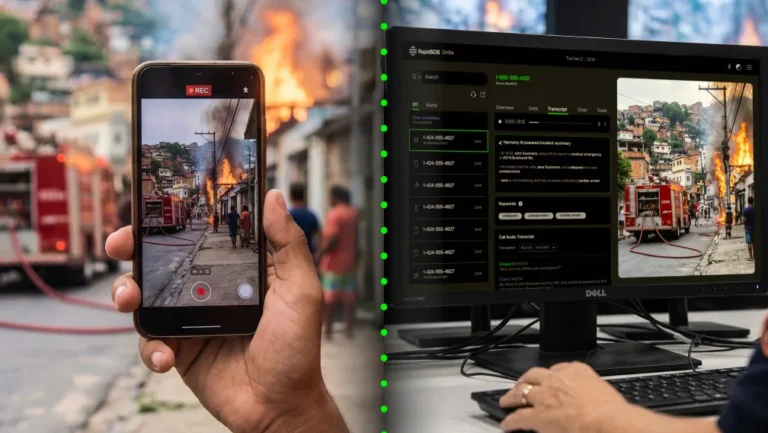
Increasingly, enterprise security and safety teams rely on digital safety tools like smart cameras and sensors to help monitor potentially thousands of different endpoints. But many of these solutions don’t easily share information. Instead, internal specialists must gather data from different tools, prolonging responses and hindering proactive emergency detection. When the different systems are connected through a common platform, enterprise security and safety teams can take advantage of the collective intelligence from these devices, leading to faster, more efficient responses.
Safety takes an ecosystem:
Along with their own internal IT silos, many organizations aren’t connected to external digital safety ecosystems. This complicates emergency response and can leave enterprise security and safety teams out of the loop. Organizations often require employees to notify internal experts when issues arise. But most people end up calling 911, likely on a mobile phone. As a result, many emergency centers will have detailed information, including location and medical information, to help inform the dispatch. But enterprise security and safety teams have access to none of this. They may not even be aware an emergency is unfolding. With the proper connection, internal experts can get intelligence at the same time it is shared with 911.
A proactive mindset:
Safety can’t be regulated to just a few employees. Workers across the business must understand safety’s importance and role in driving it. For example, mandatory safety training reduces injury rates by 18%, while monthly training can curb hazards by 10%, saving companies millions of dollars.
Safety doesn’t have to be just a line item in the annual budget. Instead, it can be a strategic lever for enterprises to help reach their overall business goals. All it takes is closing the Safety Gap. To learn more, check out our recent report.