
Innovation Day 2026
Innovation Day didn’t start on April 29.
It started in the weeks leading up to it—working through what actually matters to the people doing this job, and making sure we didn’t lose that somewhere between the message and the moment.
Because this wasn’t built for an audience.
It was built with them.
“That’s Not the Future. That’s Happening Here.”
The broadcast opened from Reno inside the National Automobile Museum, centered on where emergency response is headed next—but much of the conversation focused on something more immediate: pieces of that future are already here.
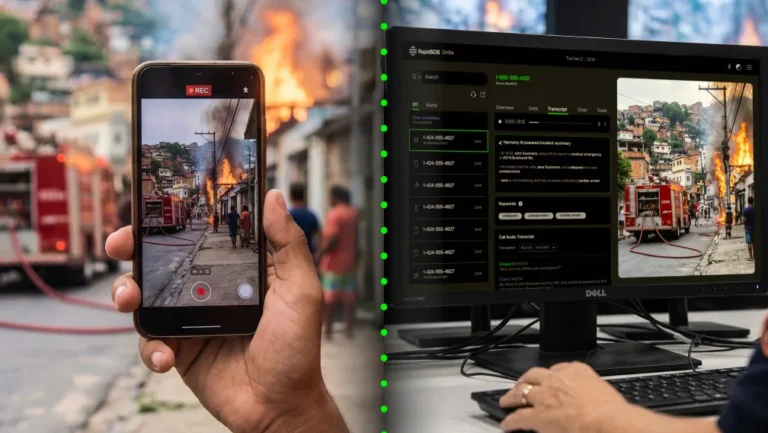
As communities become more connected, emergency response is changing alongside them. 911 centers are no longer operating in isolation from the devices, vehicles, buildings, businesses, and responders around them. Information that once lived in separate systems is starting to move together in real time.
Michael Martin opened with a reality many in public safety are already starting to experience:
The agencies here… are connected. To each other… to the devices and vehicles and buildings across this community. With AI stitching thousands of data feeds together in real time.
That is not the future. That is happening here. Today.
That idea carried through the entire day.
The Real Problem (And Why It Hasn’t Been Solved Yet)
“For too long, 911 has been handed technology that we didn’t necessarily ask for… and impacts our workflow without having a say.”
That statement from Karin Marquez hit on something many in public safety have felt for years.
The issue was never a lack of technology — at least not in recent years.
It was a lack of access to it.
A lack of connection between it.
And too often, more platforms, more screens, and more workflows being placed onto already overwhelmed teams in the name of “innovation.”
Agencies are still being forced to choose between disconnected tools or closed ecosystems that don’t reflect how emergency response actually works—across jurisdictions, agencies, and systems.
What Changed: A Network, Not Another Tool
“No AI is right 100% of the time. In public safety, that matters more than anywhere else.”
Because the conversation around AI right now can feel incredibly loud. Every platform claims to have it. Every company promises transformation. Meanwhile, the people expected to trust it are still trying to figure out where it actually helps, where it creates risk, and whether any of it truly understands the realities of emergency response.
As Zach LaValley explained:
We see AI in this work as a co-pilot… surfacing what your people need, when they need it, so they can make the call.
Because in emergency response, the challenge is rarely a lack of effort or expertise. It’s whether the people making decisions can actually see the full picture in time to act on it.
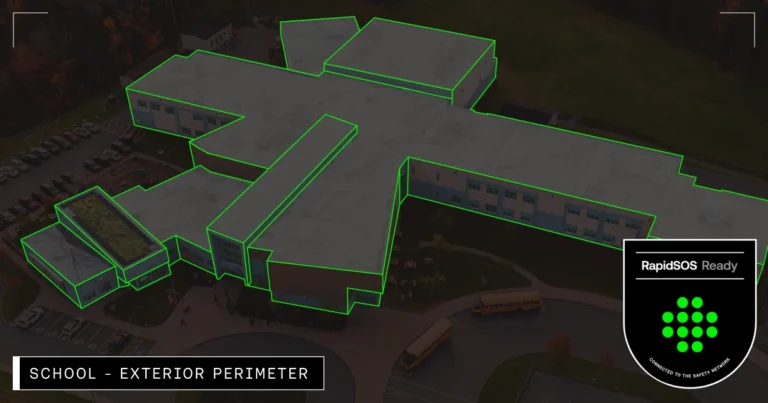
A caller’s voice is one part of an emergency. But so are the connected vehicles, panic buttons, floor plans, camera feeds, responder locations, schools, health data, neighboring agencies, and real-time information already moving throughout a community.
The more connected that picture becomes, the more supported responders and telecommunicators become too.
Built Into the Infrastructure
For many 911 centers, the challenge has never been a lack of interest in new technology. It’s whether that technology can work within the policies, protections, and infrastructure agencies already rely on to carry emergency communications.
For years, many ECCs have had strict restrictions around open internet connections on the dispatch floor. Which meant that even if agencies wanted access to additional intelligence and tools, there were barriers standing in the way before the conversation could even begin.
That’s part of why the announcement that RapidSOS HARMONY AI is now available through AT&T’s ESInet carried so much weight.

The moment a 911 call is made, the system supporting that response needs to do more than simply carry the call itself. It needs to move information securely, reliably, and fast enough to help the people making decisions in real time.
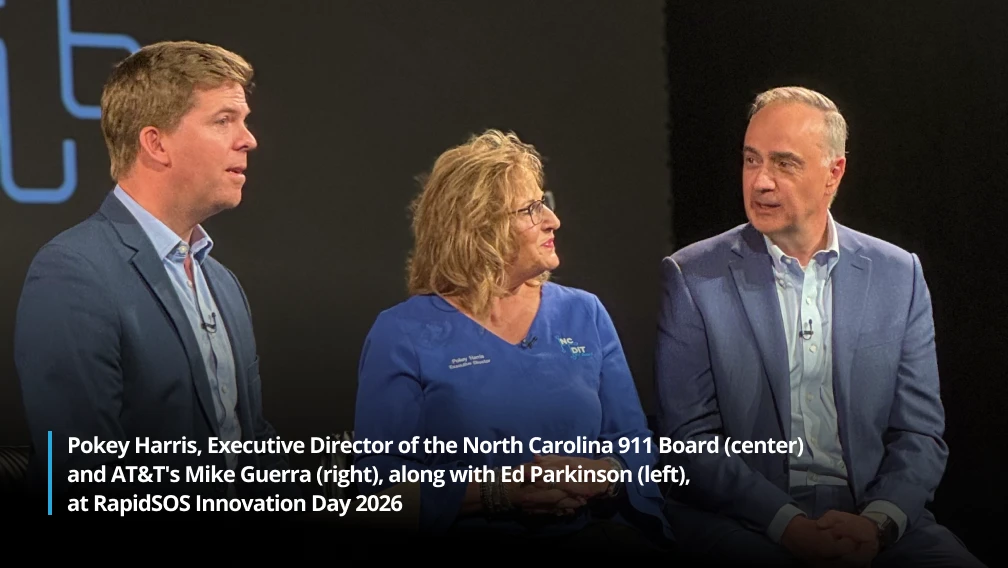
As Mike Guerra explained:
This is more than connectivity… systems carrying 911 traffic should be useful and intelligent.
And for agencies, that has real operational impact.
As more data sources become part of emergency response, telecommunicators and supervisors are often forced to work across multiple systems and intake points at once—trying to piece together information while calls are actively unfolding.
Mike spoke directly to that challenge during the discussion:
They no longer have to be dealing with multiple data channels coming through different sources. It’s consolidating that information over their existing investment.
That matters in environments where seconds count and workflows are already stretched thin. In 911 centers, technology cannot simply be dropped in and “figured out later.” Reliability, security, continuity, and interoperability have to come first.
But connectivity alone isn’t enough. Resilience matters too.
Not just whether systems work on a good day—but whether they continue working during outages, disasters, overflow events, staffing shortages, or infrastructure failures. That includes redundant connectivity, interoperability across agencies, and backup support when local resources become overwhelmed.
And for agencies continuing the transition toward NG911, the conversation is evolving too.
As Mike shared during the discussion:
Over the last five years, we’ve been building the highway. What’s exciting is that the highway is built — and now we’re ready to deliver the exciting stuff to deliver on the ultimate goal of NG911.
And as NG911 continues to evolve, so does the opportunity to move intelligence securely, reliably, and in real time across the infrastructure agencies already depend on every day.
Where It Became Real: North Carolina
For Pokey Harris, Executive Director- North Carolina 911 Board, this wasn’t about planning for a hypothetical future scenario. It was about what North Carolina learned during Hurricane Helene when multiple 911 centers across the state were impacted by infrastructure failures.

Calls still had to be answered.
Information still had to move.
Telecommunicators still had to support callers, even when the calls themselves were being rerouted across the state.
At one point, one PSAP routed calls for an entire month to another center located 220 miles away.
And like public safety always does, people figured it out.
Google spreadsheets.
Excel sheets.
State radio systems.
Phones.
Anything available to keep information moving between centers.
The creativity was impressive. But so was the reality underneath it: emergency response cannot keep relying on patchwork during major incidents.
As Pokey explained, the challenge wasn’t getting the call to another center through the ESInet. The challenge was getting the real-time information back to the people who needed it.
That experience helped validate North Carolina’s investment in statewide real-time interoperability.
Where This Goes Next
Innovation Day was never really about a single announcement. It was about where emergency response is heading—and what it takes to make that future work in the real world.
Because no one agency, platform, or provider can solve these challenges alone. Not when emergencies cross jurisdictions and information is moving from dozens of places at once.
That’s why partnerships became such a major theme throughout the day—from states and agencies to enterprise organizations, infrastructure providers, and the people inside ECCs doing the work every day.
Because the future of emergency response cannot be built on more disconnected tools. It has to create a clearer operational picture, powered by AI and connected through the broader Safety Network already surrounding an emergency.