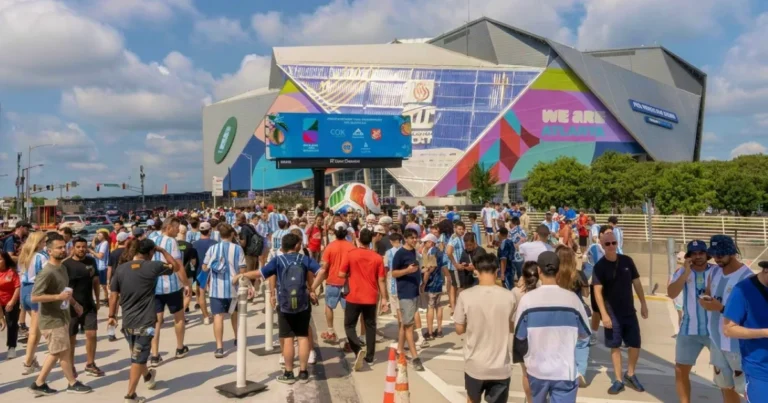


We’re well into peak season: drivers are on the road in record numbers, large-scale events are drawing crowds, and your dispatch center is feeling every bit of it. A driver locked out of their car at a trailhead. Another one’s battery dies in a stadium parking lot after a sold-out concert. A family on a cross-country road trip blows a tire on the interstate between exits. In every one of those moments, they reach for the one number they know: 911.
It’s not their fault. When people are stressed, stranded, and unsure what to do, 911 is the universal default. But the result is a queue that your dispatchers are managing—one flat tire, one dead battery, one lockout at a time—alongside the life-or-death calls that actually require emergency response.
Why Summer Brings the Surge: Travel, Unfamiliar Territory, and Non-Emergency Calls
The summer surge isn’t random; it reflects distinct behavioral patterns that peak during the warmer months. Summer is fundamentally a season of travel. People embark on road trips, vacations to lakes, beaches, and national parks, and family gatherings across state lines. Unlike winter travel, when people often fly home for holidays, summer travel is predominantly by car. This matters greatly for ECCs because when people travel to unfamiliar areas, they lose their familiar support networks.
A driver who normally calls their trusted mechanic when they get a flat tire, or whose spouse can bring a spare key during a lockout, is suddenly without these options in a strange place. When faced with an unexpected roadside issue far from home, these travelers default to calling 911, even for non-emergency situations like vehicle lockouts, dead batteries, or flat tires. They’re stressed, stranded, and don’t know what else to do.
The volume amplifies further because while emergency call volume legitimately increases (fire calls spike by 200%, medical calls by 13%, and police calls by 35%), the non-emergency call volume increases even more dramatically. ECCs must simultaneously handle genuine emergencies, such as accidents, medical events, and fires intensified by summer activities, while managing a flood of non-emergency requests from travelers unfamiliar with local resources.
Summer also brings a concentration of special events like fireworks celebrations, festivals, concerts, and major sporting events that draw crowds and intensify both emergency and non-emergency call volume. These events create situations where people are unfamiliar with their surroundings, potentially impaired by festivities, or simply in situations they haven’t encountered before.
The Real Data: Summer Roadside Calls Overwhelm Understaffed Centers
The summer surge is real and relentless. Data from this year’s Independence Day surge tells the story: 911 traffic spiked to 2.66x baseline at peak hours, and total volume beat last year’s peak by 8.3%. When you add large-scale events—including music festivals, concerts, state fairs, and outdoor sporting events—you get a sustained surge in vehicle exposure, driver stress, and roadside incidents that continue rippling into your center through August.
According to industry data, roadside events are surging to roughly an additional 2,000 events per day compared to baseline, with vehicle lockouts accounting for the majority of non-emergency roadside calls.
Summer months drive outsized roadside demand. Heat accelerates battery degradation, long road trips surface deferred maintenance, and high-traffic events concentrate breakdowns in narrow geographic windows, right where your dispatchers feel it most.
Here’s what complicates the picture: while 69% of drivers are aware of roadside coverage options, only 18% actually use them when faced with a breakdown. That awareness gap means stranded drivers default to 911 rather than calling for the help they’re already paying for.
There’s a better way to handle them. And it takes just two clicks.
The Zero-Cost, Two-Click Solution Already in Your Dispatch Console
If your center is live on RapidSOS Unite, you already have access to the roadside assistance feature, and it costs your center nothing to use.
When a caller reports a non-emergency roadside situation (such as a lockout, dead battery, flat tire, or minor breakdown), your dispatcher can send a digital link to the caller’s phone in two clicks. That link connects the driver to Drivers Premier’s national network of background-checked service providers, with transparent wholesale pricing and live technician tracking.
The caller is in capable hands, and your dispatcher is back on queue.
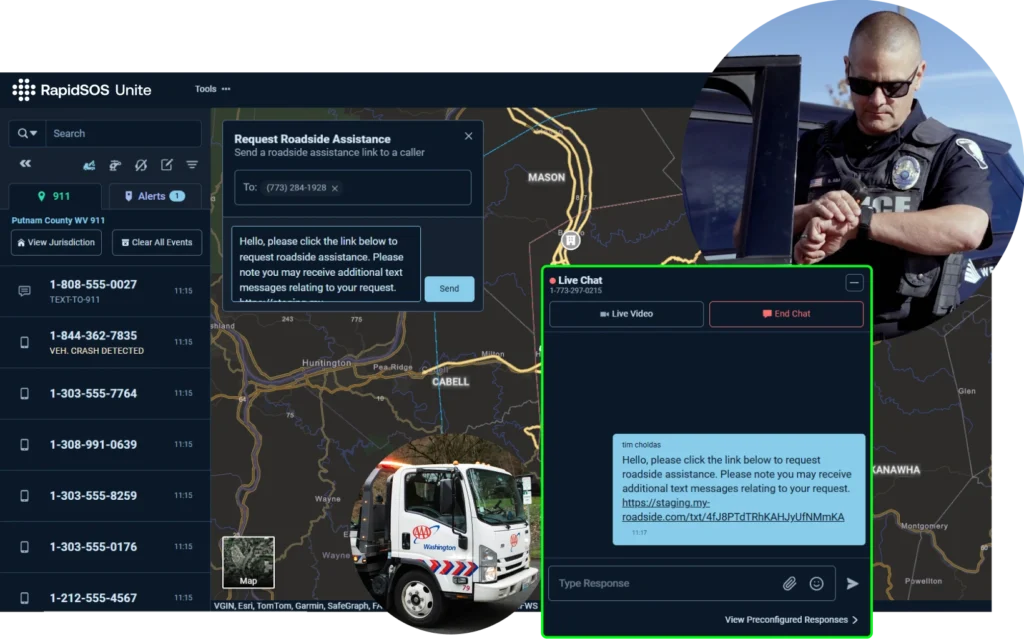
Step 1 – Caller reports a non-emergency roadside issue — lockout, flat tire, dead battery, or minor breakdown
Step 2 – Dispatcher clicks Roadside Assistance button in RapidSOS Unite to a digital link to the caller — two clicks
Step 3 – Caller taps the link and self-selects service from a vetted national network
Step 4 – Live tracking keeps the caller informed; dispatcher is clear for true emergencies
ECC Feedback
Instead of telling a stranded caller ‘I can’t help you,’ this tool does the work for you. It’s a win-win that frees up our dispatchers and field units to focus on true emergencies.”
— Veronica Edens, Assistant Director, Houston County 911, Georgia
Proven Impact: 126 ECCs, 1,000+ Diverted Calls
The RapidSOS and Drivers Premier partnership launched just over a year ago. In twelve months, it quietly became one of the most practical tools in the ECC toolkit. This isn’t because it’s flashy, but because it solves a real daily problem with almost no effort from your team.
- 126 ECCs across 37 states actively using the integration
- Nearly 1,000 drivers assisted
- Most common event: Vehicle lockouts (50%)
- A 83 NPS from Drivers — 90% rated service 9 or 10
That 83 NPS is significant. For reference, most consumer service industries consider anything above 50 to be excellent. Drivers Premier delivers an experience drivers genuinely rave about — during one of the most stressful moments of their day. That outcome reflects directly on your center, because your dispatcher connected them.
Driver Feedback
The service provider arrived promptly, communicated clearly, and ensured my vehicle was transported safely. The service was handled with great care and genuine consideration for my well-being.”
Why Now: Summer Volume Peaks and Real-World July 4th Impact
July 4th gave us a vivid snapshot of what peak summer looks like in the 911 network. At RapidSOS, we processed 982 emergency transactions per second at peak load — one of the busiest nights on record. That infrastructure stress is felt in every dispatch center across the country.
Non-emergency roadside calls represent a significant portion of inbound volume during these peak events. By routing them efficiently through Drivers Premier, you free your dispatchers and field units for the calls that matter most.
If your center uses RapidSOS Unite and you haven’t enabled Drivers Premier yet, now is the moment. Call volume from non-emergency roadside situations will remain elevated through August as sustained summer travel continues. Your dispatchers are already managing a full queue — tools that reduce friction without adding training burden or cost are worth prioritizing now.
The Bottom Line: 5 Benefits for Your Dispatchers
- Instant relief for gray-area calls. Lockouts, dead batteries, flat tires — resolved in two clicks.
- No cost to your center. Included in RapidSOS Unite at no additional charge.
- No disruption to local tow rotations. Operates independently of county-managed tow protocols.
- A better outcome for stranded drivers. Background-checked providers, transparent pricing, live tracking, and a 83 NPS.
- Liability protection. Connect the driver to a certified professional who owns the outcome — not your field units.
126 ECCs across 37 states have already made this part of their standard toolkit. Contact your RapidSOS Customer Success Manager to enable it, or read what other dispatchers are saying about Drivers Premier.