

For decades, when a crash happens, 911 telecommunicators have relied on a phone call, often from a bystander or the victim themselves. As a former telecommunicator, Amy Marion, Director of Public Safety at RapidSOS, has seen firsthand how a delay in that call, or a lack of accurate information, can have tragic consequences.
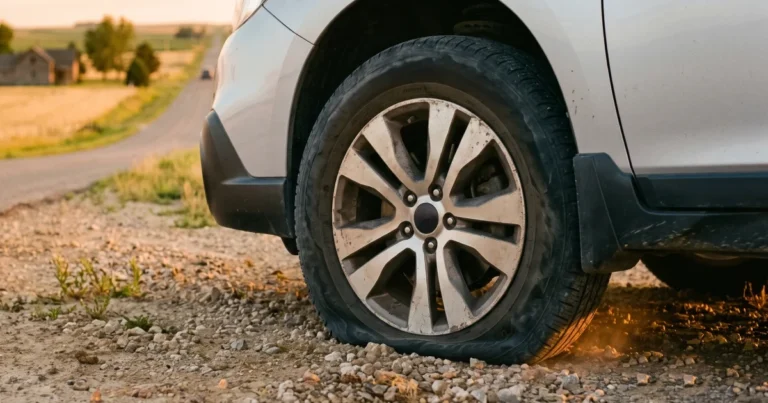
In the webinar, “From Crash to Response”, Amy shared an incident where a family friend’s 18-year-old son died in a car crash on a dark, rural road. The teenager missed a sharp curve at night and crashed into a field. His vehicle was hidden from view and was only discovered after an unknown amount of time when a passerby saw the headlights.
Amy believes that contextual data from the vehicle could have changed the outcome of the incident. If the vehicle’s telematics system had automatically notified 911 of the crash, authorities would have known the location of the vehicle, the time and severity of the crash. By providing this information directly to 911, telematics data could have ensured a faster and more accurate response, potentially saving the teenager’s life.
This tragic reality highlights the significant gaps telecommunicators and first responders face in a workflow dependent on caller-provided information.
Telematics data significantly influences the workflows of Emergency Communication Centers (ECCs) and first responders by providing critical, real-time information that traditional voice-based systems lack. This moves the process from a voice-centric, reactive model to a data-driven, proactive one, which can help prevent death and serious injury and enable responders to get the right resources at the right time.
Instead of relying on a caller’s potentially inaccurate verbal report, ECCs can receive contextual data from vehicle telematics or mobile devices. This allows dispatchers to “better prioritize” calls and send an appropriate response. Key data points include:
- Precise Location: Precise GPS coordinates “get the help that we need to somebody that’s critically injured” and can be the only notification received for crashes in rural areas. This ensures the correct agency is dispatched and speeds up the response.
- Crash Severity: The data provides objective metrics on the impact, such as speed at impact, airbag deployment, and rollover status. This allows a dispatcher to immediately gauge the severity of the crash and not over respond to an incident that does not have severe injuries. This is critical because, as Michael Armitage, Executive Director of Calhoun County Consolidated Dispatch Authority, mentioned, “we’re sending millions of dollars of apparatus across city and county roads and in traffic that actually creates additional road safety and road hazards.”
- Occupant Information: Knowing the number of occupants and their seatbelt status provides a clear picture of how many people might need help. This is vital in situations where a victim has been ejected from the vehicle and is not immediately visible.
Once on the scene, first responders use the telematics data to make more informed decisions and prepare for what they will encounter, which helps them “be proactive and not reactive.” .
- Strategic Planning: Data on crash severity and vehicle type allows first responders to prepare their equipment and strategy while en route. For instance, knowing a high-speed, head-on collision occurred can prompt them to call for a trauma team and additional resources before they even arrive on scene.
- Enhanced Safety: Telematics is particularly impactful with the rise of new vehicle technologies like Electric Vehicles (EVs). Knowing a vehicle is electric allows responders to access its Emergency Response Guide (ERG) and “know where to cut or not to cut” to avoid electrocution and “mitigate these emergencies.”
- Resource Allocation: Data on the number of occupants helps responders quickly confirm if everyone has been accounted for at the scene. Knowing what seats were occupied and if seat belts were fastened or not can help more quickly identify a potential ejection or entrapment based once on scene.

In an ideal emergency workflow, a vehicle’s telematics data would automatically and instantly connect to the systems used by ECCs and first responders. This could bypass a voice call, sending critical information directly to the dispatcher’s screen and enrich reports received over the phone.
This contextual data allows for smarter, faster, and more effective dispatching. First responders would be able to see the specific data points of a crash, helping them prepare for what they will encounter on the scene.

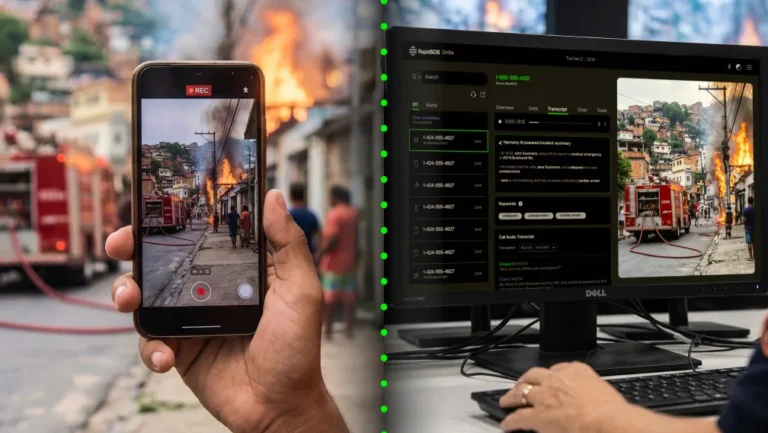
Traditionally, 911 dispatchers rely on verbal reports from callers, which can be delayed, inaccurate, or missing details. With RapidSOS, if a vehicle is in a severe crash, instant crash alerts—including airbag deployment, rollover detection, speed, and seatbelt status—are sent directly to 911. This means dispatchers don’t have to rely on an injured driver or a witness to call in the accident, enabling faster EMS dispatch with the right resources, reducing response time, and improving survival rates.

Consider a scenario where a vehicle crashes into water and the driver is unresponsive. With RapidSOS, the incident dashboard can detect the vehicle type and identify emergency procedures for extrication. If the driver has a smartwatch linked to RapidSOS, medical details (e.g., diabetes, heart condition) are also surfaced. AI summarizes the situation, showing only the most critical details, such as, “Unconscious driver, vehicle submerged, emergency extrication needed.” This ensures first responders arrive with the right tools, like water rescue equipment or the Jaws of Life.

Understanding emerging vehicle types like EVs and autonomous vehicles (AVs) is crucial for emergency response, as both present unique challenges and opportunities that traditional models can’t address. As Eric Troy, VP of eDispatches, Rapid SOS noted, EV response is “manpower intensive” and requires specialized knowledge, since vehicle fires “typically don’t go out fast” and there are “so many areas of these vehicles that we cannot cut without putting ourselves at risk.” This is why having access to the vehicle’s Emergency Response Guide through telematics data is invaluable; it provides real-time, vehicle-specific instructions to help first responders know “where to cut or not to cut.” For AVs, Michael Armitage pointed out the “big information gap” that could exist with riders who might not have any information about the vehicle. This means that in an emergency, responders can’t rely on a driver to provide details. By using sensors and connected information, telematics can pass crucial data to 911, and keep both the public and responders safe.
For telematics service providers, and automotive manufacturers, integrating with a public safety platform like RapidSOS isn’t just about social responsibility—it’s a smart business decision.
- Platform Differentiation: Offering a direct connection to 911 is a significant value-add for your customers. It enhances your brand’s reputation for safety and can give you a competitive edge.
- Operational Efficiency: The platform offers a single source of truth, giving you end-to-end visibility into an incident. Instead of waiting for fragmented information, you can instantly know when first responders arrive on the scene, if your driver was transported, and what tow company was used. This visibility helps streamline the entire post-incident workflow, from insurance claims to legal teams.
- Cost Savings: Avoiding unnecessary “over-responses” not only improves community safety but also saves money. As Michael Armitage pointed out, sending millions of dollars of emergency apparatus on a non-critical call is a waste of resources and increases the likelihood of another accident. Using telematics to determine the severity of a crash ensures the right assets are dispatched.
- Protecting Your Drivers and Fleet: For fleet managers, the benefit is clear. When a driver is incapacitated, a telematics-triggered alert is often the only way to get help. This ensures the safety of your employees and reduces the risk of long-term injuries or fatalities, mitigating potential lawsuits and reputational damage.
The future of emergency response is no longer just about reacting to a call; it’s about using data to be proactive. By connecting vehicle telematics directly to 911, we’re building a safer, more efficient system that saves precious time and, most importantly, lives. As Eric Troy said, the goal is to “eliminate death and serious injury” for everyone involved in emergency response, and data is the key to making that a reality.
Listen to our discussion From Crash to Response on demand today to learn more.