
911 Hard Outage
RAPIDSOS UNITE FEATURE
Call queue visibility, Callback numbers, Reroutes via partner PSAPs
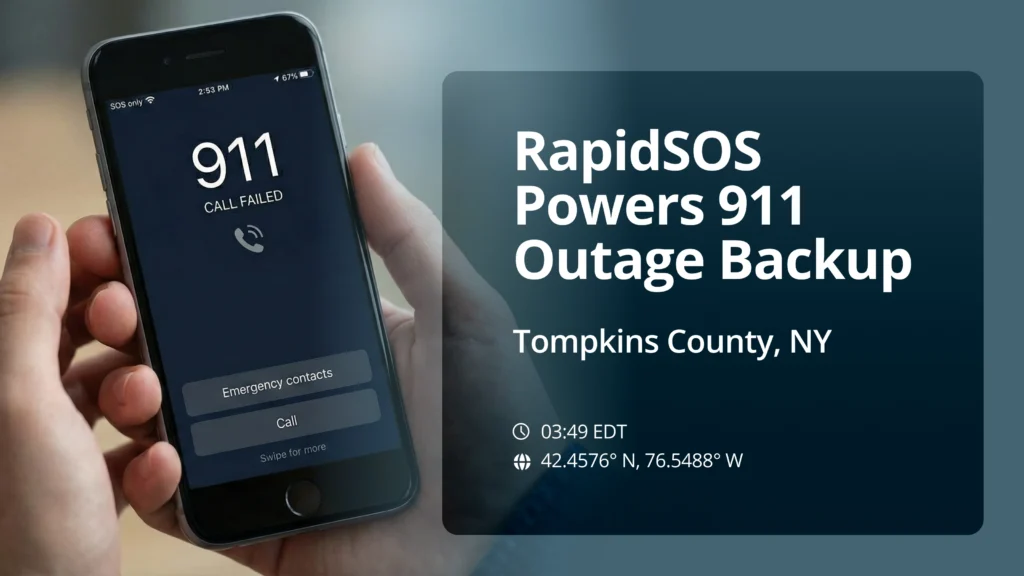
In April, Tompkins County’s 911 center faced one of its most alarming scenarios: a hard outage of its 911 lines. For more than three hours, no calls rang through the PSAP’s phones. Yet, thanks to RapidSOS, dispatchers never lost sight of their community — and never stopped answering emergency calls.
Assistant Director of 911 John Halaychik recalls the moment his team realized something was wrong. A transferred call came in from a neighboring county. Then another. And suddenly, dispatchers asked themselves a chilling question:
When was the last time our phones actually rang?
Checking the RapidSOS platform, the answer appeared instantly. Calls were still flooding in — but the PSAP’s phones weren’t ringing. Instead, the incoming 911 calls were visible only in the RapidSOS queue.
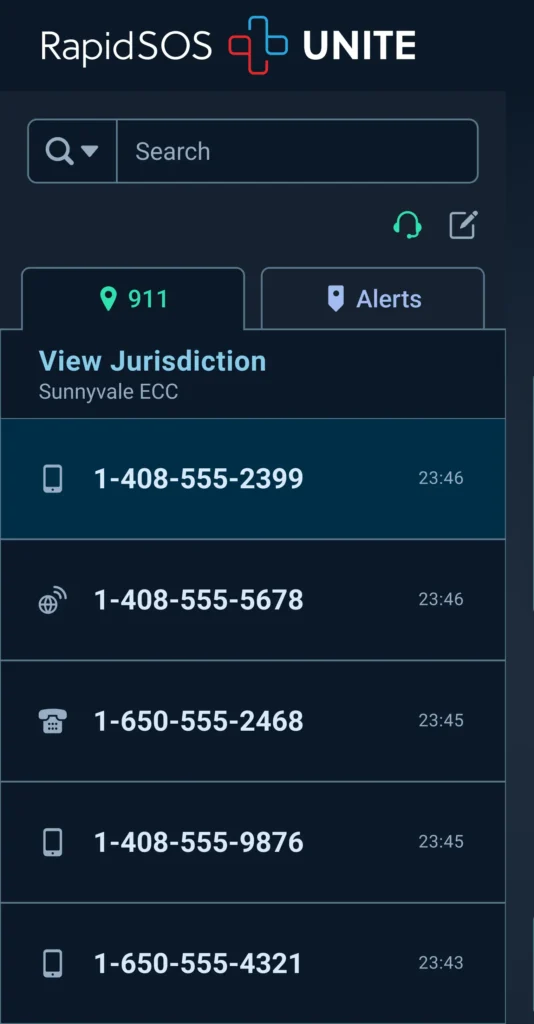
“Without RapidSOS, we would have been completely blind,” Halaychik explains. “It was our detection solution, our awareness solution, and ultimately the only way we could keep serving callers during the outage.”
Dispatchers quickly pivoted. They began manually calling back numbers from the RapidSOS queue to connect with residents in distress. In some cases, neighboring counties that also used RapidSOS were able to reroute calls back into Tompkins County, closing the gaps.
Though partial phone service returned after three hours, the event ultimately stretched to 12 hours. Remarkably, only two 911 calls were missed outright — and both were recovered later through partner reroutes.
The incident underscored a lesson Halaychik often preaches: redundancy and visibility are non-negotiable. “We’ve had three major outages in the last year,” he says. “Two from phone providers and one caused by a squirrel chewing through a cable that blew out our redundant power.
If you don’t have backup systems, you’re just waiting for a crisis.
For Tompkins County, redundancy now takes many forms. A new backup center, built during COVID, ensures operations can continue even if the main PSAP goes dark. Portable generators and redundant power systems protect against unexpected failures.
And RapidSOS adds a digital layer of resilience: even when phones are silent, the data keeps flowing.
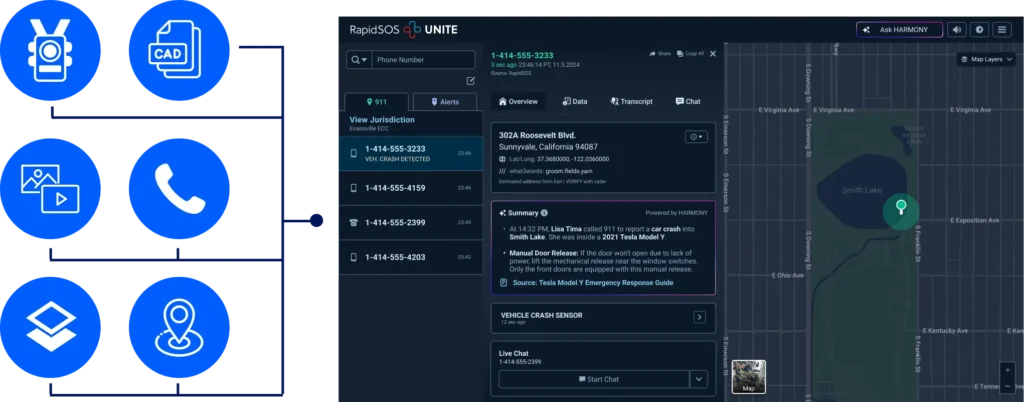
“RapidSOS gave us situational awareness,” Halaychik explains. “Even if everything else fails, if I can log back in, I can at least see what’s happening and start calling back. That can make the difference between life and death.”
The outage also sparked renewed conversations with county leadership about investing in resiliency. Halaychik’s team used the event as a real-world example to emphasize why technology like RapidSOS isn’t just a convenience — it’s a necessity. “We missed two calls that night. Without RapidSOS, it could have been dozens,” he says.
Beyond outages, RapidSOS provides Tompkins County with a wealth of contextual data that strengthens responses every day.
Caller location, emergency health profiles, and integration with officer-worn devices ensure responders are never in the dark. And new features continue to be evaluated through state-level funding programs.
Halaychik, a second-generation dispatcher with 36 years in the industry, sums up the lesson in plain terms: “You don’t always know you’re down until it’s too late. RapidSOS gave us eyes when we would have been blind. It kept us operational.”
For his team, the outage was stressful — but also validating. They had proof that their redundancy planning worked, and that their investment in RapidSOS paid off when it mattered most.
As counties everywhere grapple with aging infrastructure and new cyber and physical threats, Tompkins County’s experience stands as both a cautionary tale and a roadmap. Resiliency isn’t an option; it’s survival.