Woman in Overturned Car
RAPIDSOS UNITE FEATURE
Location Data, Axon Integration
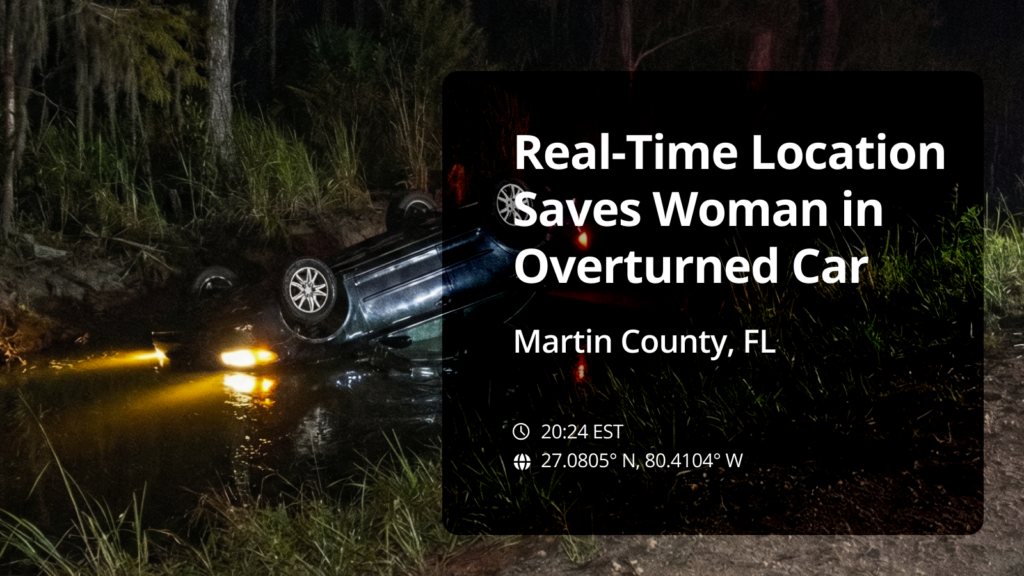
Dispatcher Angela Chapman from Martin County, Florida, remembers the immediate panic in the caller’s voice. The caller, distraught, had been involved in a vehicle accident, and her car was upside down in a ditch, half-submerged in water. The timing of the incident — pitch black outside — added to the challenge of finding the scene of the crash.
The vehicle was off the road, hidden in the tree line, and in a rural area right on a county line. Without the ability to describe her exact location, getting help to the caller quickly would have been nearly impossible in the past. Previously, a call from this location would have only provided a cell tower ping, potentially suggesting the wrong county. The next step would have been a time-consuming process of contacting the cell provider to request an exigent ping, often requiring paperwork and a significant wait. During that critical time, the car horn or the cell phone battery could have died, leaving the victim undiscovered.
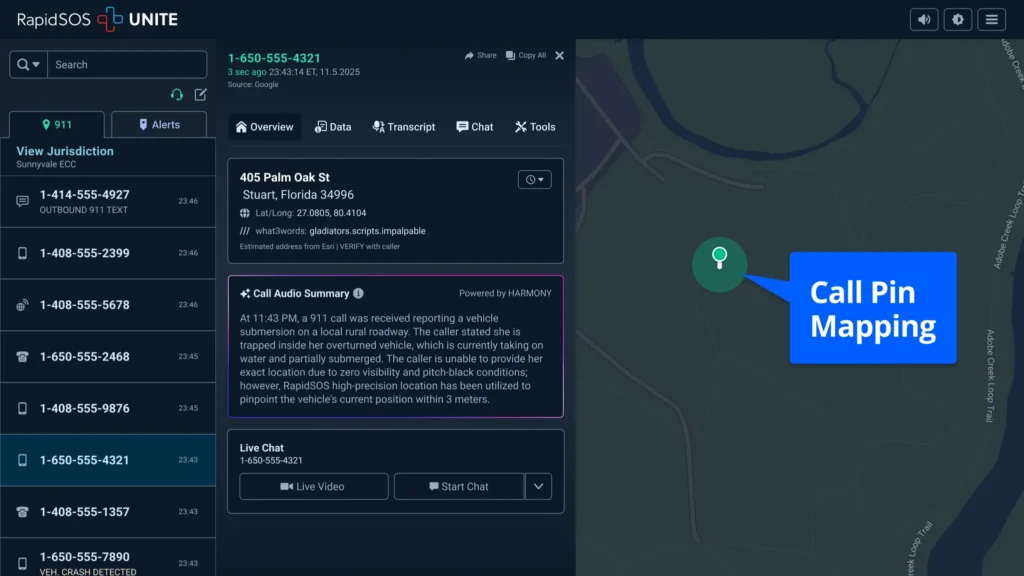
Fortunately, this call was different. Angela immediately checked RapidSOS and was able to pull up the precise location of the caller.
I could see on the map right where she was. So I knew we would be able to guide them [the deputies] in.
She used the pinpoints to give directions, noting landmarks like a concrete pad for cows to assist the deputies who were familiar with the rural surroundings.
The Martin County Sheriff’s Office has integrated RapidSOS with its Axon system, providing an extra layer of situational awareness. Angela used this feature to track the responding deputies in real-time.
“I was able to say, tell so-and-so he’s got to go east more. He’s too far west.” This live guidance was critical, allowing her to prevent units from heading in the wrong direction and ensure they were closing in on the caller.
The moment of closure arrived when the deputies keyed up the radio: “We are out with it.” Simultaneously, the horn they heard over the radio matched the desperate horn blaring in the background of the 911 call.
Angela reflects on the vital difference this technology has made, highlighting that before RapidSOS, 911 centers were helpless in situations like abandoned or unresponsive calls in rural areas. Being unable to get help to those who couldn’t speak or were in an unknown location had always left a pit in her stomach.
The ability to watch the rescue play out in real-time gives Angela a peace of mind she didn’t have when she started. “It makes you feel part of it and you’re an important part of it,” she says, emphasizing that advanced location tools are the true game-changer in 911.