



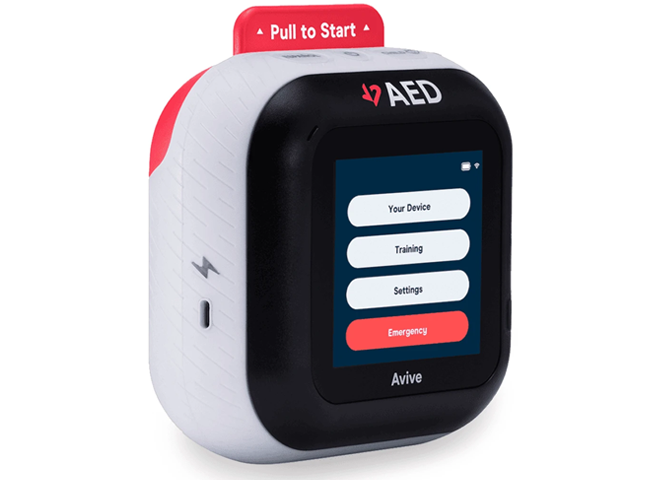
The Problem: When Every Second Counts, We Still Wait Too Long
Each year in the U.S., more than 350,000 people suffer sudden cardiac arrest outside of a hospital. Despite billions invested in AEDs over the last three decades, the survival rate has remained stuck at just 10%.
Why?
- Over 70% of cardiac arrests occur at home, yet AEDs are often located in public spaces
- Most people don’t know where the nearest AED is or how to use one
- Traditional AEDs are passive — they don’t notify 911, can’t be dispatched or provide any clinical insight
- EMS and hospitals arrive with no visibility into whether an AED was used, if a shock was delivered, or the patient’s cardiac rhythm
Traditional AEDs are not easily visible to 911. They’re passive, inaccessible, and disconnected in the moments that matter most.
This delay costs lives.
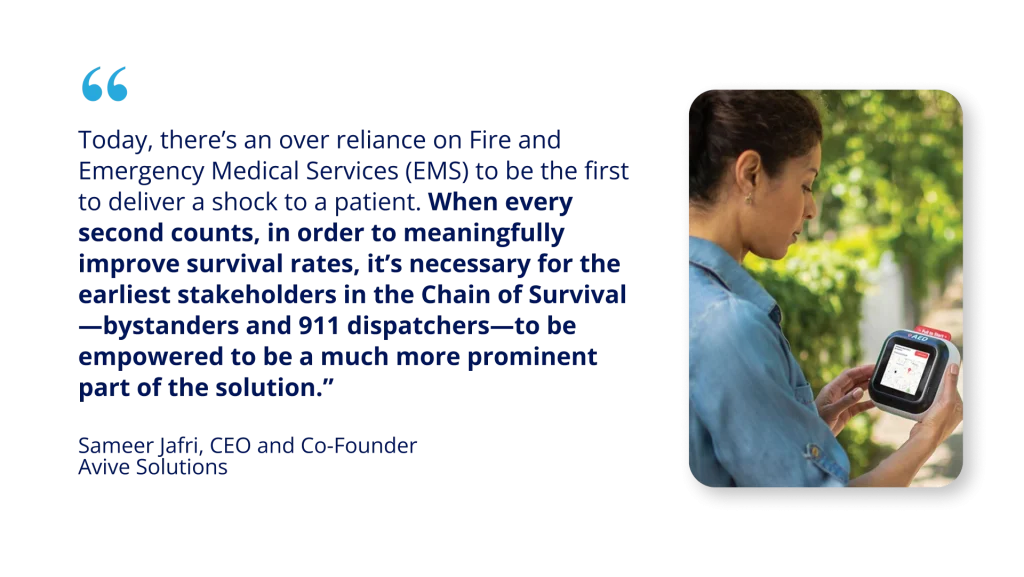
The Solution: A New Emergency Response Model
Avive + RapidSOS have pioneered the first connected AED platform that transforms AEDs from passive devices into active, dispatchable emergency assets.
This isn’t a feature — it’s a new model for how 911 activates citizens to respond to cardiac arrest.
With RapidSOS, Avive Connect AED®s can now be:
- Dispatched by 911 like field responders
- Tracked in real time as they move toward the scene
- Sending live clinical data (like shock status and ECG) to 911, EMS, and hospitals

How It Works
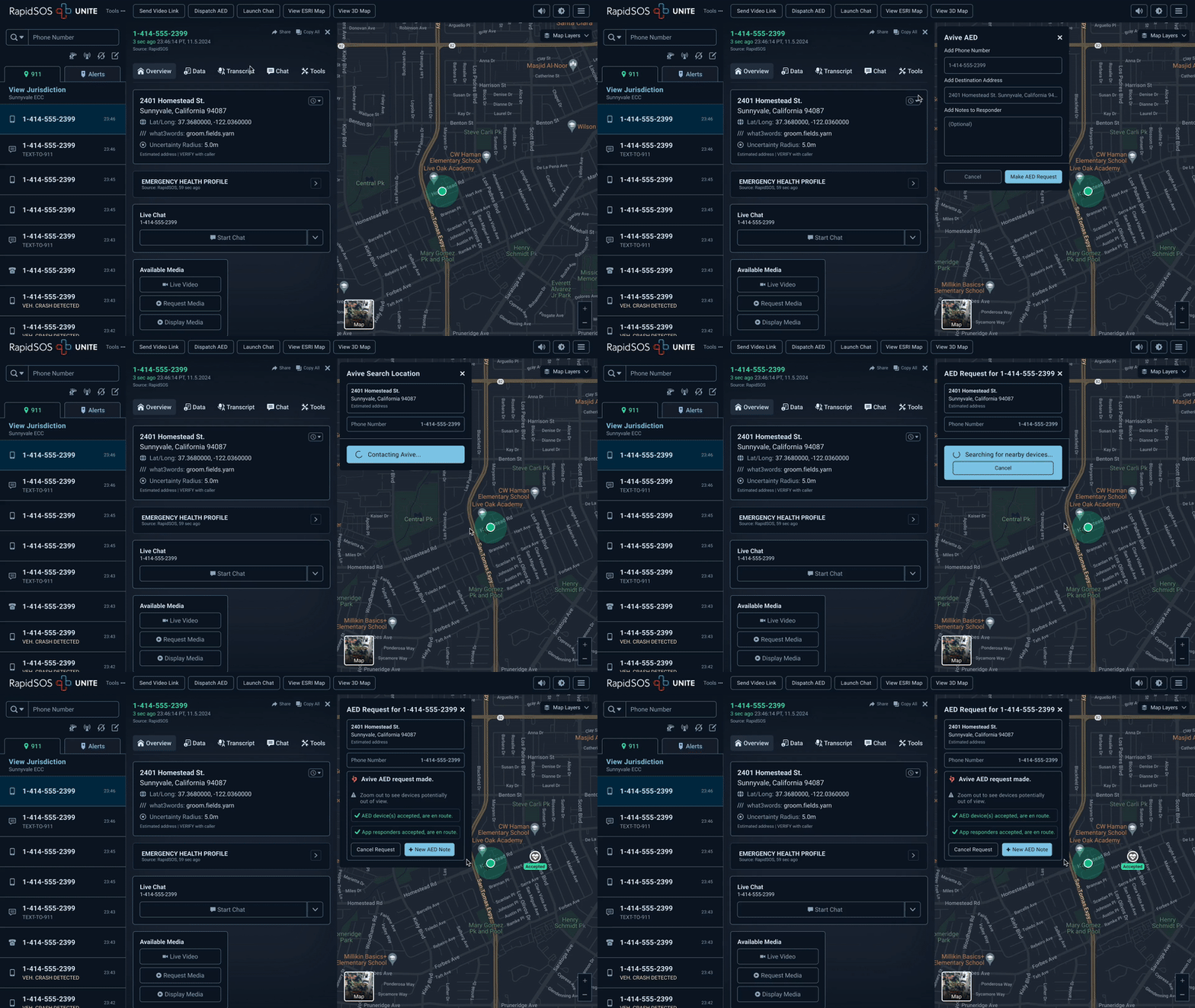
1. AED(s) Dispatched Through 911
- 911 telecommunicators receive an OHCA call
- Using RapidSOS UNITE, they trigger an alert to a network of nearby Avive Connect AEDs
- This initiates Intelligent Response™, enabling live data exchange between 911 and AEDs
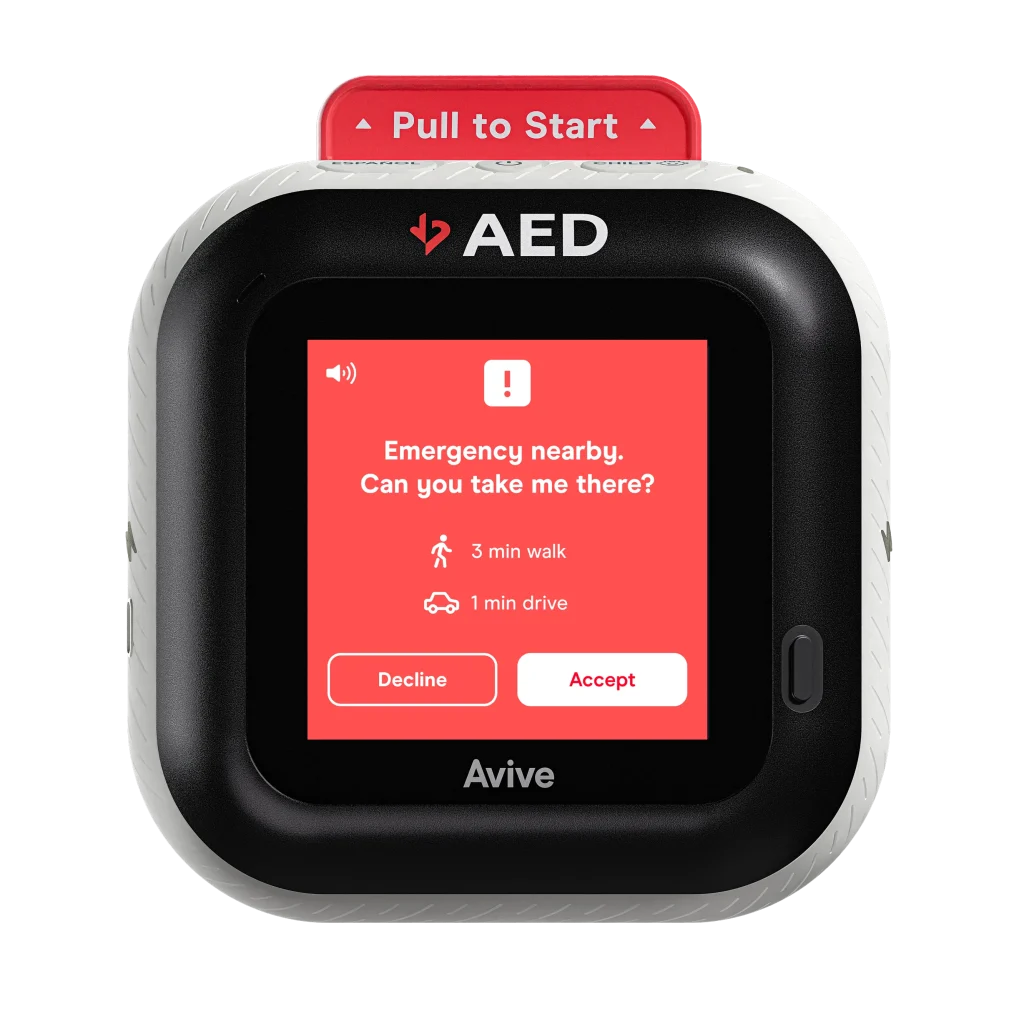
2. Avive Connect AED(s) Alerted
- AEDs in range display a red screen and audible alarm
- Nearby Emergency Alerts provide map guidance to the scene
- Device owners also receive a SMS text alert with directions
3. Citizen Responds
- Once the alert is accepted, the AED displays a map with navigation instructions
- The dispatcher can track the AED’s location in real time, alongside police, fire, and EMS vehicles
- A QR code opens step-by-step directions via Apple or Google Maps
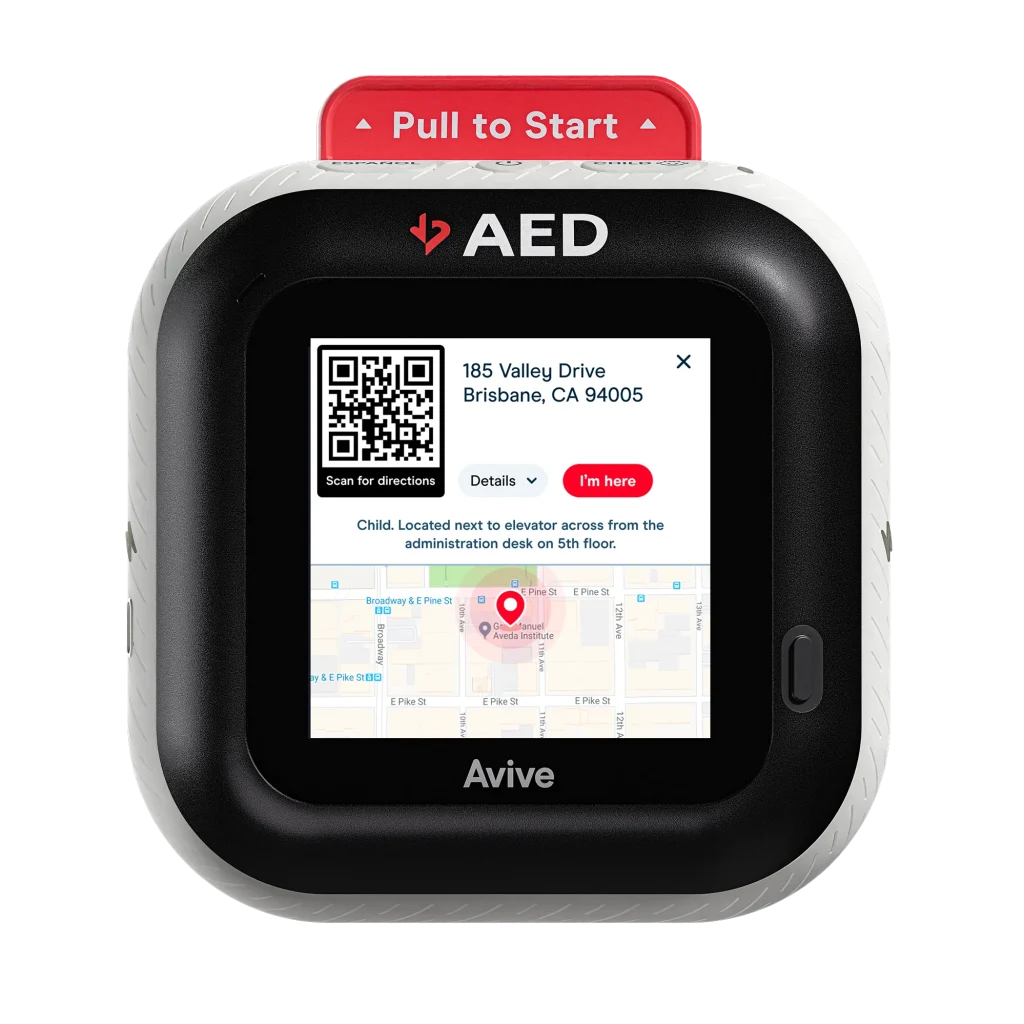
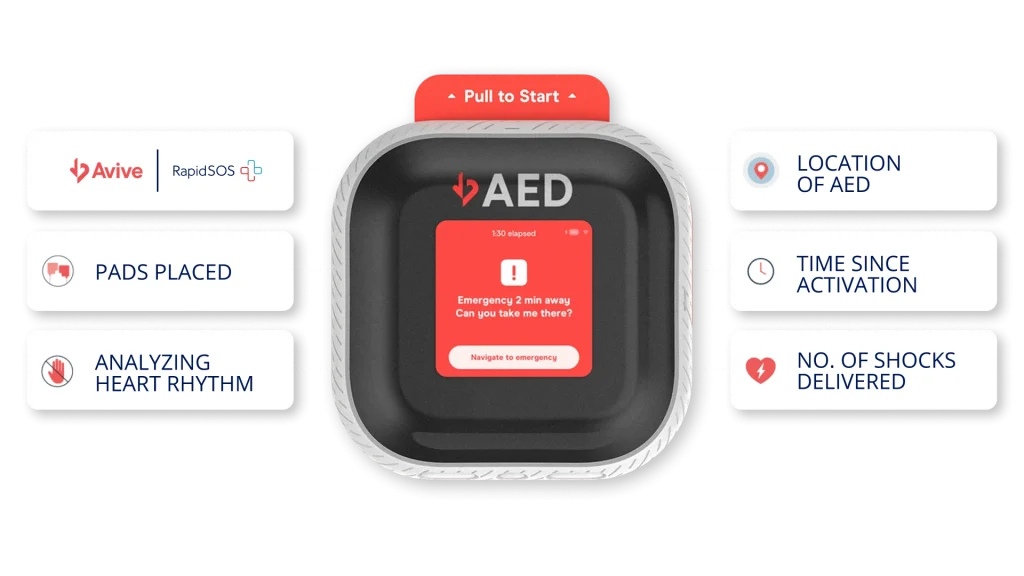
4. AED in Use: Real-Time Guidance + Data Sharing
Once the Avive Connect AED® is powered on, it immediately initiates live communication with 911 through the RapidSOS platform.
Real-Time Data Automatically Shared with 911 and Hospitals:
- Device location
- Time since activation
- Shock delivered or not
- Pediatric or adult mode status
- ECG data (via secure link)
At the same time, the AED provides the responder or citizen with step-by-step audio and visual instructions, including:
- Animated pad placement guidance for pediatric and/or adult patients
- CPR coaching with real-time motion graphics
- A compression metronome aligned to international CPR standards
911 Has Continuous Visibility Into:
- The AED’s real-time location and movement
- Whether the AED has been activated and accepted
- The rescue step the user is on
- The most recent shock analysis
- Number of shocks delivered
This model empowers trained volunteers, enhances 911 visibility, and equips first responders with critical information before they’re even on scene.
5. Post-Incident: Hospital + Provider Access to Clinical Data
Hospitals and downstream care teams gain access to post-use incident reports via the REALConnect platform, which provide critical clinical insights from the AED.
Incident Report Includes:
- Timeline of the AED usage events (elapsed time from AED Powered On)
- # of shocks delivered
- Full ECG heart rhythm analysis strips
This ensures receiving hospitals can review the patient’s cardiac arrest data before or upon arrival, enabling faster triage, better preparedness, and more informed clinical decisions.
First Save Using AED Dispatched by 911: A 4 Minute Community™ Success in Cumberland County
A community responder arrived with an Avive Connect AED® and delivered a life-saving shock before EMS arrived—redefining what’s possible in out-of-hospital cardiac arrest.
In July 2024, Lyall Lehman was out for his routine walk in Cumberland County, Pennsylvania, when he collapsed from cardiac arrest. A nearby group called 911 and started CPR.
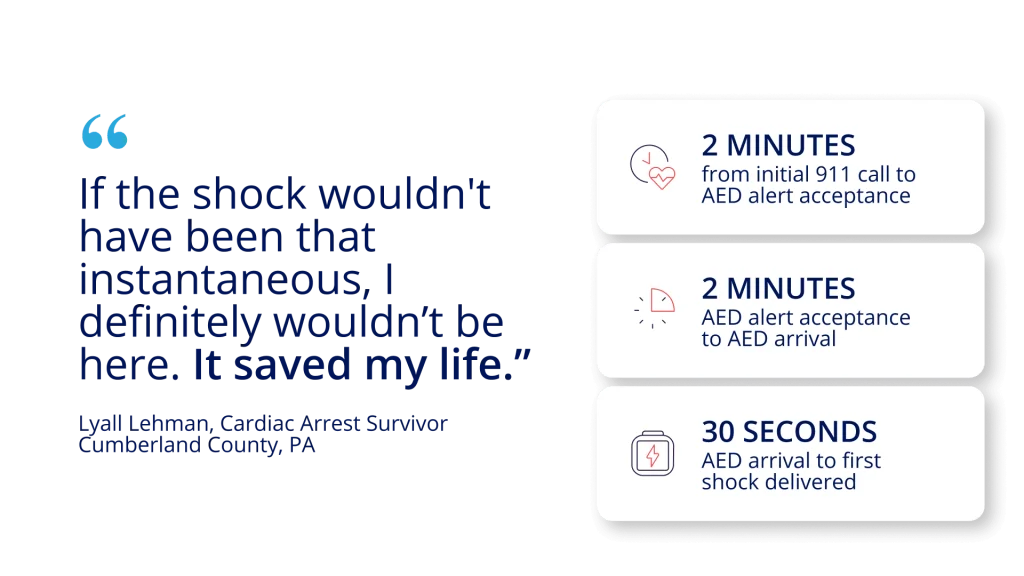
Thanks to the county’s participation in the 4 Minute Community™ program, 911 telecommunicators dispatched a nearby Avive Connect AED®—the first time many had ever seen an AED deployed like a responder.
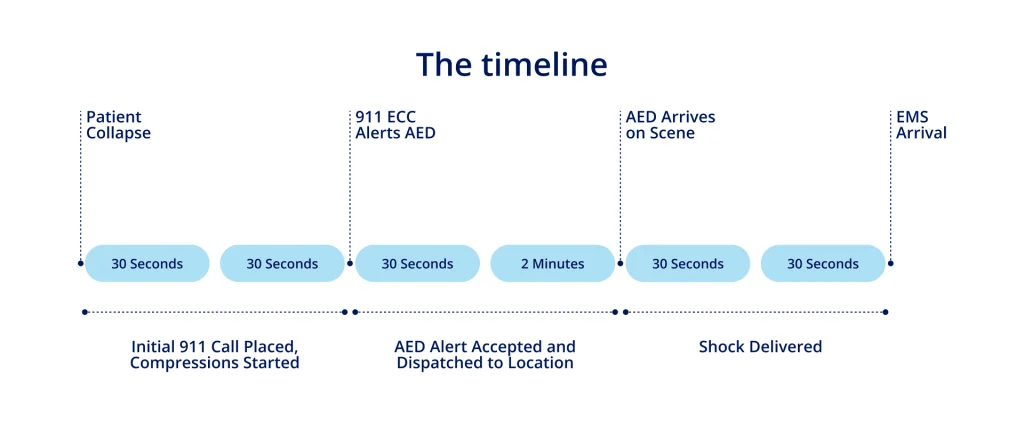
- 4:38 PM — Volunteer Allen Wirt, part of the CARE Team, accepts the alert
- 4:40 PM — He arrives on scene with the AED
- Within 30 seconds, the device delivers a life-saving shock
- EMS arrives shortly after to continue care
- Lyall survives and is discharged from the hospital days later
Why This Matters to Public Safety
This wasn’t just a save — it was the first documented life saved using the 4 Minute Community™ model.
With Avive + RapidSOS, communities and 911 agencies can:
- See and deploy AEDs in real time
- Track their movement and usage like any other responder
- Equip EMS and hospitals with real-time clinical data—pre-arrival
- Involve trained volunteers and bystanders in coordinated response
This technology can be the difference between life…and death.
This is a reality in select communities across Pennsylvania, Georgia, Texas, and Tennessee with more states being added in 2025.
Your community can be next.
What’s Included:
- Community readiness assessment
- Strategic AED deployments in homes, businesses, schools, multi-person facilities, and law enforcement vehicles
- 911 telecommunicator training and integration support
- Funding pathways via hospitals, public-private partnerships, and grant programs
AEDs should no longer be just boxes on a wall. They’re being replaced with active, intelligent, lifesaving assets—and they’re already saving lives.
Visit Avive.com to learn more about how to become a 4 Minute Community™