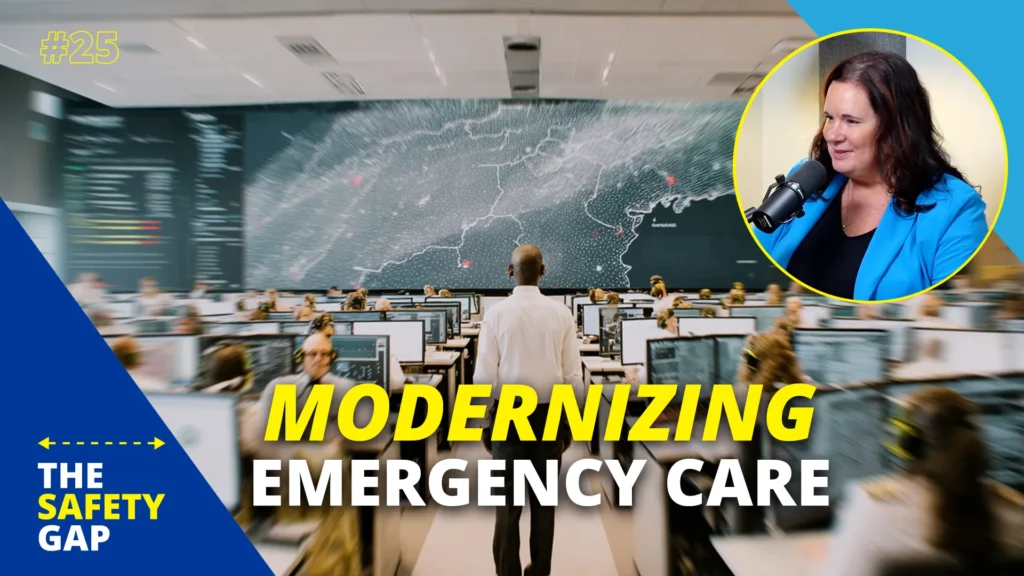


When Linda Zerwin became Executive Director of the Emergency Telephone System Board of DuPage County in 2009, she inherited a fragmented system with 22 separate dispatch centers. Today, that system has been consolidated into just two highly efficient centers, saving millions of dollars while dramatically improving emergency response times.
The transformation didn’t happen overnight. It took ten years of careful planning, relationship building, and strategic policy development. But the results speak volumes about what’s possible when public safety leaders prioritize collaboration over territorial concerns.
The driving force behind consolidation was the 2008 recession. Mayors and village managers were desperately seeking ways to reduce costs without compromising public safety. Linda saw an opportunity to help communities achieve both goals simultaneously through strategic consolidation.
But the financial benefits were just the beginning. The real proof came in emergency response improvements. Linda shared a compelling example of two structure fires at the same apartment complex, exactly one year apart. In the first incident, handled by the legacy system, it took 13 seconds to create the call and 52 seconds for fire units to respond. A year later, using the consolidated system, the initial ticket was created in nine seconds, with fire units dispatched in 15 seconds and on scene in just two minutes and 27 seconds.
The consolidation process required more than just administrative restructuring. It demanded a complete overhaul of radio systems, computer-aided dispatch technology, and facility infrastructure. DuPage County partnered with the state’s STARCOM system for radio communications and invested $17 million in each of two new dispatch centers, designed with redundancy capabilities to ensure continuous operations even during catastrophic events.
Perhaps most importantly, Linda emphasized that successful consolidation requires genuine listening and consensus-building. “You have to listen to people,” she noted. “I say sometimes there’s the agenda, then there’s the political agenda, the personal agendas, the hidden agendas. And if you can figure out what all those are… you just keep shoving everybody till you finally get down that funnel.”
The key was creating buy-in through collaborative decision-making. Every major procurement decision involves focus groups with representatives from all participating agencies. When evaluating vendors, every department gets input, but decisions are made through consensus rather than individual votes to avoid creating winners and losers.
This approach has transformed DuPage County into a model for 911 consolidation nationwide. Linda regularly receives calls from other jurisdictions seeking advice on replicating their success. The county’s consolidation policies have even been incorporated into state statutes, demonstrating the broader impact of their innovative approach.
The lesson for other public safety leaders is clear: consolidation isn’t just about cost savings, though those are significant. It’s about creating a more resilient, efficient system that better serves communities during their most critical moments. But it requires patience, skilled facilitation, and an unwavering commitment to putting public safety above politics.