

Decades-Old Problem: The Telephone Game
For Lt. Joshua Jenkins, Director of the Northern Nevada Regional Intelligence Center at the Washoe County Sheriff’s Office, the problem was familiar to every public safety leader: by the time a 911 call traveled from a panicked caller to a dispatcher to a deputy in the field, critical information had already been filtered, delayed, and distorted.
“There’s always going to be a delay,” Jenkins said. “When you’re getting information from somebody calling 911, they’re having a bad day. They’re emotional. For some, it’s the worst day of their life. And then that information is being relayed to a 911 operator who’s then inputting it into the computer and trying to relay it in pertinent part to our first responding units.”
He called it the telephone game — information passed from caller to dispatcher to deputy, each handoff introducing delay and potential error. Drone pilot Jason Masters put a number on it: a minute to a minute and a half between the moment a call was placed and when deputies were notified in the field. The core problems were predictable — and costly:
- Callers in crisis communicate emotionally, not tactically — dispatchers had to filter and interpret before relaying
- Each handoff in the chain introduced delay and potential information loss
- Deputies arrived without real-time situational awareness, making split-second decisions with incomplete pictures
- Drones sat grounded until a CAD event was created — often 60–90 seconds after a call came in
Building a Smarter First Response
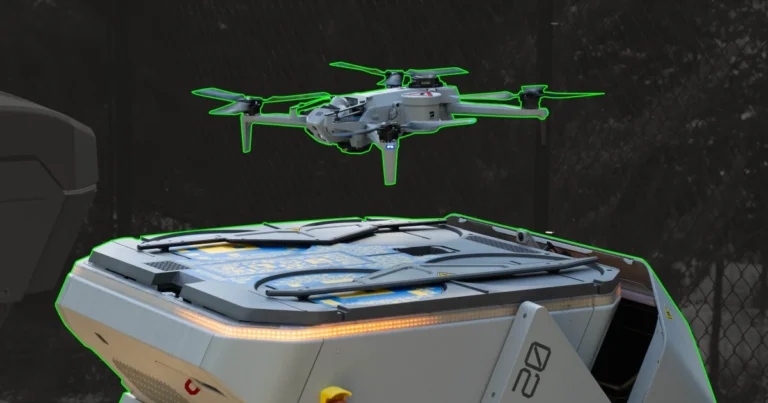
Washoe County built a real-time intelligence center — the Northern Nevada Regional Intelligence Center — pairing RapidSOS with a Drone as First Responder (DFR) program. Harmony AI, RapidSOS’s AI engine, transcribes 911 calls in real time — giving intelligence center staff live access to call data the moment a caller connects.
The concept: monitor 911 calls as they come in through RapidSOS and launch a drone before the CAD event is even created, well before the first deputy is dispatched.
The setup is deliberately integrated: the telecommunicator and the drone pilot work side by side, able to collaborate the moment a call comes in. “That ability is kind of groundbreaking for us,” Jenkins said. “We’ve always had to rely on, for lack of a better term, the telephone game. When we’re able to look at the call or see what’s being said and hear the context from ourselves, we’re able to interpret that data and see what resources we have available and what resources are needed.”
We’re able to get on scene about 70% of the time prior to ground units being on scene.”
The transition from new technology to daily dependency happened almost overnight. “The day we got it, it proved itself as a system,” Jenkins said. “We were able to immediately see the benefits of using the system to aid in our dispatching of resources from the center.”
Proven Within Hours of Going Live
Within hours of going live, the team used RapidSOS alongside the DFR program to locate and apprehend a home invasion suspect — with no injuries to the suspect, the homeowners, or the deputies. The incident drew local media attention after deputies used RapidSOS live 911 monitoring to launch a drone within minutes of the initial call. Using thermal imaging, drone pilots tracked the suspect’s movements in real time and guided responding deputies to a safe arrest before the situation could escalate.
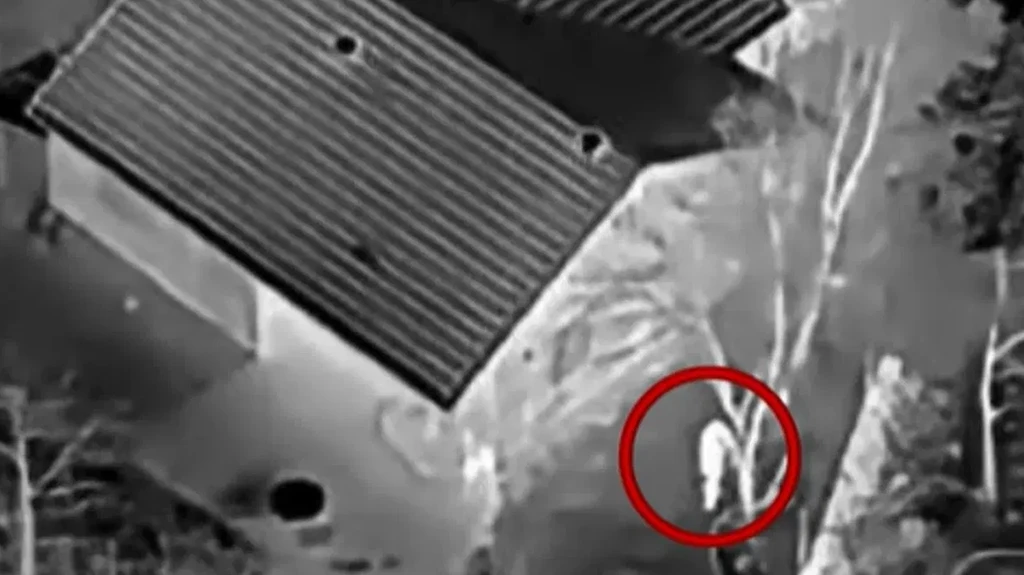
Home invader suspect caught on camera via drone (Washoe sheriff)
Read local coverage of the incident here.
“The RapidSOS component allowed us to be in the air and en route with our DFR program prior to the first deputy being dispatched,” Jenkins said. That was day one.
For Jenkins, the outcome illustrated something bigger than a successful apprehension. It demonstrated that the “split second versus five minutes” problem — deputies arriving blind versus deputies arriving informed — could actually be solved. “Through all the technologies we’ve incorporated, we are able to get all that information, get eyes on scene, and give the deputy responding a more complete picture. They’re not making a split-second decision. They have a few minutes to go over all the information, ask clarifying questions, and get a fuller picture of what they’re walking into.”
On Scene Before the Ground Units
The operational gains are concrete:
- Case Drone is airborne within 15–20 seconds of a launch decision
- Travels at 53 mph, covering a three-mile response radius in roughly 3–3.5 minutes
- Arrives before ground units approximately 70% of the time
- Deputies now have minutes — not split seconds — to review live intelligence before arrival
Masters describes how the live transcript changes the speed of the launch decision: “When the call comes in, we’re able to watch the transcript live and make that very quick decision on whether or not to launch the drone.” The result is aerial eyes on scene before patrol units have even acknowledged the call.
The response from deputies has been overwhelmingly positive. “They know that there’s somebody watching out for them,” Jenkins said, “and that there’s somebody looking out for them and able to help them gather more information and assess the situation to give them the best picture of what they’re walking into.”
Jenkins’ message to other law enforcement leaders is direct: “RapidSOS is a steep upgrade in using traditional dispatch systems to get information to first responders. It aids dispatch, takes some of the burden off of them, and allows us to communicate effectively in conjunction with our troops in the field.” That first deployment has since become an early proof point for what real-time intelligence can deliver—faster situational awareness, safer tactical decisions, and outcomes that have been recognized well beyond the walls of the intelligence center.
Connectivity saves lives
See how RapidSOS can connect your agency or enterprise to the world’s largest Safety Network.