
What is Alyssa's Law?
Alyssa’s Law calls for public elementary and secondary schools to be equipped with a panic alarm for use in a school security emergency, including but not limited to a non-fire evacuation, lockdown, or active shooter situation. The panic alarm, which may or may not be audible within the school building, must provide a direct to 911 notification and can also notify law enforcement immediately upon an activation.
Requirements vary by state. Some states mandate installation of a panic alarm system directly linked to law enforcement. Others only require school boards to consider adopting a system. At the federal level, the proposed ALYSSA Act would move toward a national baseline, extending the requirement across all states. Regardless of where a given state falls on that spectrum, the spirit of the law is the same: notify authorities as fast as possible.
What does Alyssa's Law mean for Emergency Communication Centers (ECCs)?
The intent of Alyssa’s Law is to reduce law enforcement response times for events occurring on school campuses. While there are several solutions that are Alyssa’s Law compliant, these offerings may vary in price, functionality, and effectiveness. Education departments should collaborate with Emergency Communication Centers to ensure that the selected silent panic alarm solution is compatible with technology used in the jurisdiction’s ECC and by first responders.
Because requirements differ by state and schools typically drive vendor selection, schools can’t assume that compliance alone equals effective notification and response. A solution can meet the letter of the law and still fall short of what a dispatcher or first responder actually needs at the moment. Early ECC involvement, ideally before a vendor is selected, is what makes a solution actionable and effective, whether the state has a hard mandate or only a “consider” requirement.
Illinois’s recently signed Alyssa’s Law is a useful model here, not because its underlying mandate is the strongest (it asks school districts to consider a mobile panic alert system, not install one), but because it is inclusive of the 911 stakeholders — a critical component to ensuring that compliance results in effective notification and response by meeting the technical and operational workflows of the ECC, the first point of notification. The law calls for any mobile panic alert system to integrate with PSAP/ECC infrastructure and support real-time coordination across multiple first responder agencies, and it requires school districts and private schools to coordinate with their local 9-1-1 authority on integration requirements before they purchase or implement a system, with any resulting PSAP/ECC connectivity cost covered by the school. Built into the statute, in other words, is the exact principle above: the ECC has to be in the conversation before the vendor decision is made.
Alyssa’s Law presents a great opportunity to develop a partnership between public safety and education departments, and ECCs can play a key role in inter-agency planning and coordination. Here are some things for ECCs to consider to guide the selection of an Alyssa’s Law compliant silent panic alarm system:
Collaborate and communicate with community stakeholders
Consider hosting a stakeholder meeting that brings together practitioners (such as school administration, school staff, law enforcement officers, emergency medical technicians, 911 and more) to discuss operational needs of the solution. Together, talk about what is most important to each stakeholder group in a panic alarm solution and co-create a long-term vision for what success looks like. As a follow-up, make sure to schedule monthly or quarterly working group meetings to discuss the vendor selection process, implementation, and operations. Lastly, put the chosen solution to the test in school lockdown exercises: determine what works well and what needs improvement. Ensure that user feedback is provided to your prospective provider so that improvements can be made.
Evaluate the panic alarm solution's integrations and interoperability
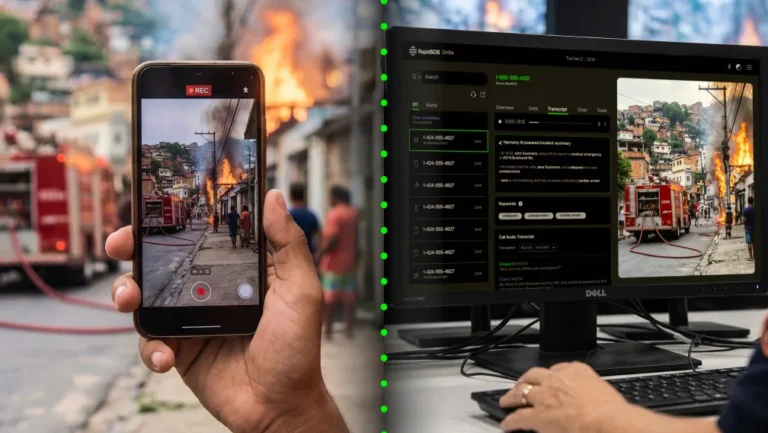
It’s probably safe to say that the last thing your ECC needs is another standalone application to manage. So look for a school safety partner that integrates with your existing applications. RapidSOS is an industry leader in integrating life-saving data to its Safety Network and displaying actionable data for a more informed response. RapidSOS Unite is relied upon by thousands of agencies across the United States to securely deliver critical emergency data to 911, including school-originated panic alerts. When choosing a panic alert solution, ask providers if they are RapidSOS Ready to ensure that your 911 agency can seamlessly access panic alert data. School safety emergencies often result in multi-agency response, making interoperability a critical capability for sharing incident information.
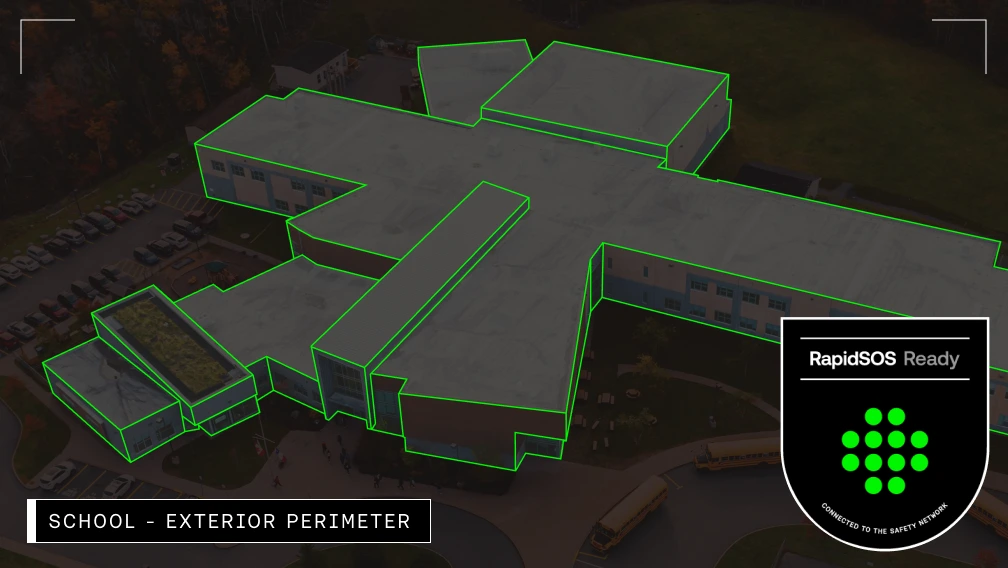
While panic button alerts provide immediate notification, precise location information paired with up to date response maps are equally important. Accurate shared floor plans support improved communication and navigation during an emergency incident. ECCs should be able to see panic alert data in conjunction with existing mapping tools that are shared across schools and emergency response networks. RapidSOS Unite supports vendor agnostic site-specific mapping that works in conjunction with 911 device based call location, panic alert notifications, and other critical data sources that may be available during an active incident. When these signals work together, they create more situational awareness and less confusion across the entire response ecosystem.
Seize the opportunity to add on additional safety capabilities
What other information and capabilities does your ECC need to provide a more informed and efficient response to school events? There are several other applications and data sets that your ECC can leverage in addition to a silent alert system to improve outcomes in the case of an emergency. AI-based weapons detection can alert 911 the moment a weapon is confirmed, and video and camera integrations add situational awareness for command and control during an incident. RapidSOS Ready partners deliver this kind of context and capability to improve emergency outcomes.
Conclusion
Alyssa’s Law presents Emergency Communication Centers both a challenge and an opportunity. The challenge is working with your school or multiple school districts in your jurisdiction to identify a solution that meets the mandate to connect directly with public safety to reduce response times. However, the law also presents an excellent opportunity to collaborate with education departments to build relationships with the community and stakeholders, and take school safety to the next level. RapidSOS’s world’s largest Safety Network serves as the foundation for thousands of ECCs across the United States, connecting panic alert providers, mapping and location partners, and weapons detection partners so that schools can become Alyssa’s Law compliant with a system that also works with public safety.