

In recent years, 911 outages have become more frequent and widespread, leaving millions of people across multiple states temporarily unable to access emergency services. Headlines report on these outages with increasing regularity, highlighting the vulnerability of legacy emergency communications infrastructure.

When a 911 system outage occurs, the consequences can be significant, particularly when it affects two critical components: voice call delivery and computer-aided dispatch (CAD) systems. Each has a distinct role in emergency response, and interruptions to either can severely hamper 911 operations.
- Voice Call Delivery: This is the lifeline between citizens in distress and emergency response centers. When voice call systems go down, calls may not be able to be completed or dropped, preventing people from connecting to 911 dispatchers in critical moments. This can come in the form of individual telephone carrier outages, 911 network outages, or call handling system outages.
- CAD System Outages: CAD systems are the backbone of real-time dispatching. When they fail, dispatchers are forced to revert to manual processes, increasing response times and the potential for human error.
Both types of outages disrupt the efficiency and timeliness of emergency responses. While voice call outages affect citizens’ ability to initiate a 911 call, CAD outages hinder Emergency Communication Centers (ECCs) from accurately relaying information to responders in the field.
How ECCs Maintain Operations During Outages
Despite the challenges posed by outages, ECCs across the country have implemented layers of digital redundancy that help maintain continuity of service. These fail-safes are designed to support uninterrupted operations even when traditional systems falter.
- IP-Based Backup Systems: Many ECCs have adopted internet-based (IP) solutions as a backup for traditional networks and telephone systems. This allows for an alternative path for emergency call data to reach dispatchers.

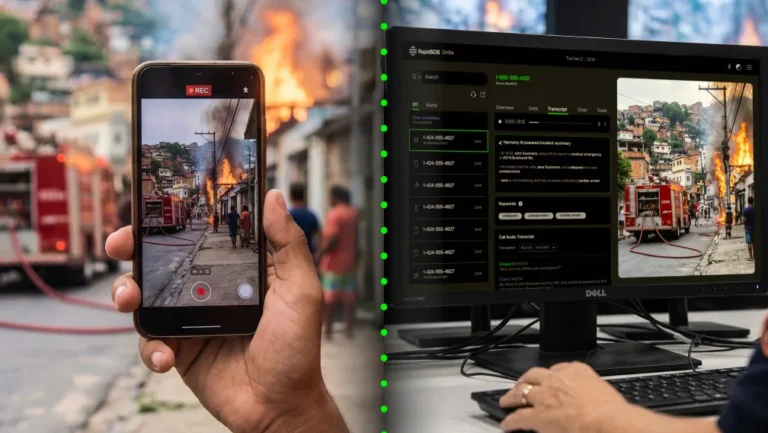
- Mapping Calls with RapidSOS: Tools like RapidSOS UNITE Jurisdiction View offer ECCs a way to continue receiving critical 911 call information, even when traditional systems are compromised. Transmission of location and additional data, independent of the voice network, allows incoming 911 requests to appear on telecommunicators’ digital maps.
Below, Michael Armitage, Executive Director at Calhoun County Consolidated Dispatch Authority in Michigan, explains how RapidSOS ensures that his agency can maintain communication with citizens in real-time, even during an outage.

- Text and Multimedia Messaging: Video to 911 offers ECCs an alternate method for communicating with the public, ensuring critical information is transmitted visually when voice and text are unavailable.

Additionally, innovative communication platforms such as Text-from-911, Agency Share, and Chat enable local ECCs to communicate with one another during outages. These channels enable ECCs to collaborate seamlessly and ensure efficient emergency response.
Overcoming Disruption: How Nevada Managed the April 2024 911 Outage
A stark example of the resilience of public safety agencies during outages occurred in April 2024, when a multi-state 911 outage impacted Nevada. On April 17th, the system failure made national news as millions of people were affected. The Las Vegas Metropolitan Police Department’s Communications Bureau faced a sudden and significant spike in call volume as their 911 floor worked tirelessly to maintain services.

Despite the challenges, they relied on their layered systems of redundancy. Using IP-based backups and text messaging services, they kept in contact with the public and field responders throughout the outage. These systems allowed them to handle a surge of emergency requests, ensuring that critical incidents were addressed promptly.
A Reminder of Public Safety’s Resilience in the Face of Outages
Outages pose a serious threat to 911 operations, but public safety agencies have proven time and again that they are up to the challenge. With advanced technology, multiple layers of digital redundancy, and a commitment to serving their communities, ECCs are able to provide protection, even in the face of disasters and system failures.
Interested in learning more about digital redundancy for ECCs? Request a demo to see how RapidSOS UNITE can help maintain operations during outages.