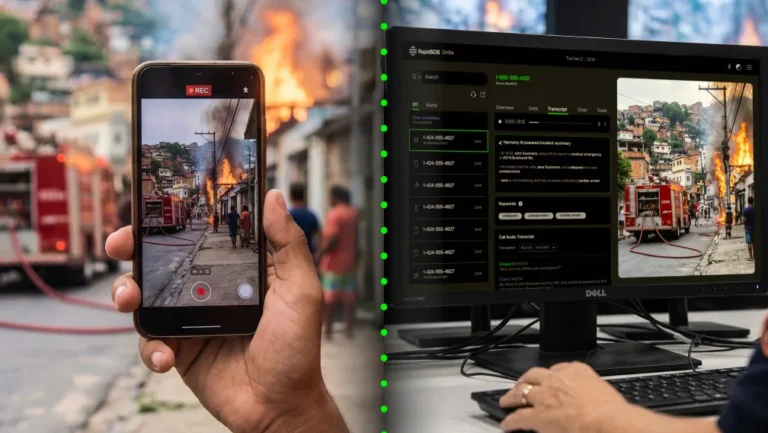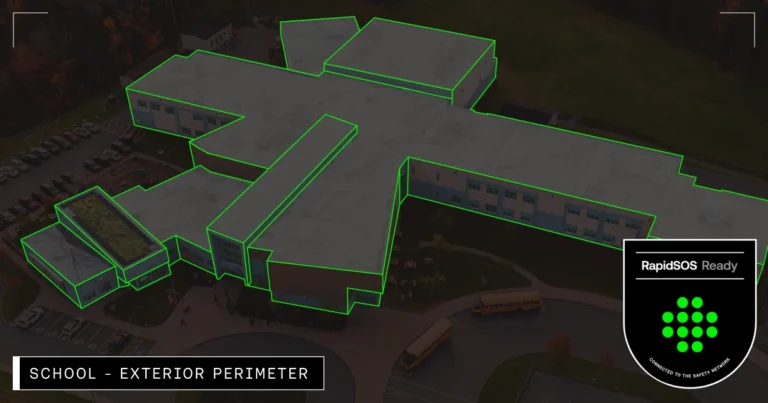
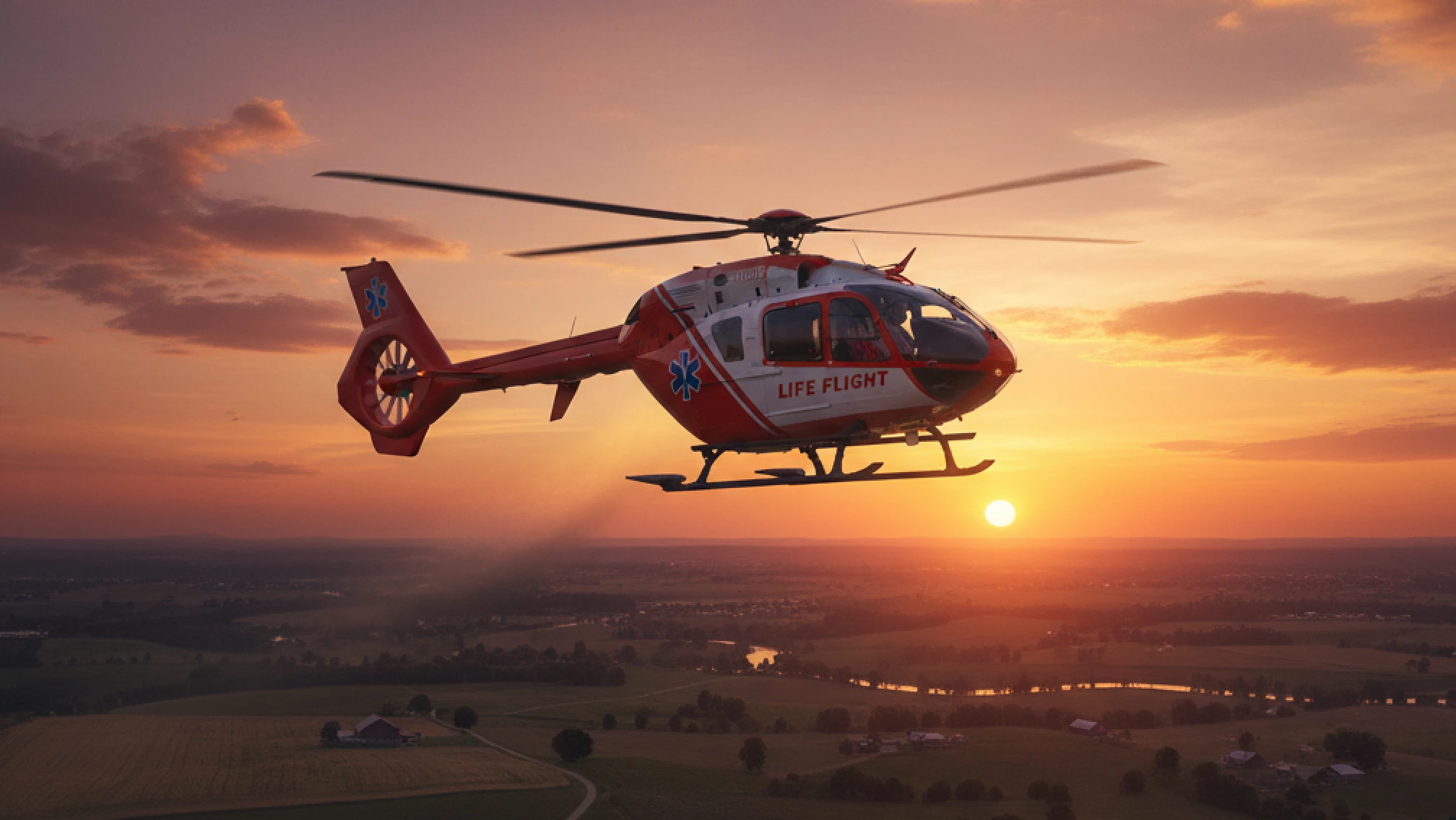

In rural America, where sprawling distances between landscapes and trauma centers are the norm, the reality of emergency response can be grim. For 911 telecommunicators, the frustration is palpable: knowing a patient urgently needs an air ambulance but being slowed by a manual, time-consuming dispatch process. The frantic race against the clock is often hampered by phone calls, coordinate errors, and critical delays.
But thanks to a powerful integration between RapidSOS and Global Medical Response (GMR), this process is being transformed. In a short period, this partnership has enabled hundreds of digital air ambulance launches directly through the RapidSOS UNITE platform, bringing a modern solution to a decades-old problem. This isn’t just about a new feature; it’s about a complete re-imagining of how rural communities get critical, time-sensitive care.
For Paul Nave, Director of Owensboro-Daviess County 911, the integration has been nothing short of a “game-changer.” He recalls how the old process would tie up a call taker, who would have to manually call a separate air dispatch center, relaying information and coordinates. “It was cumbersome and it was not efficient,” says Paul. This manual approach not only slowed down the emergency response, but also pulled telecommunicators away from answering other incoming calls, creating a domino effect of delays.
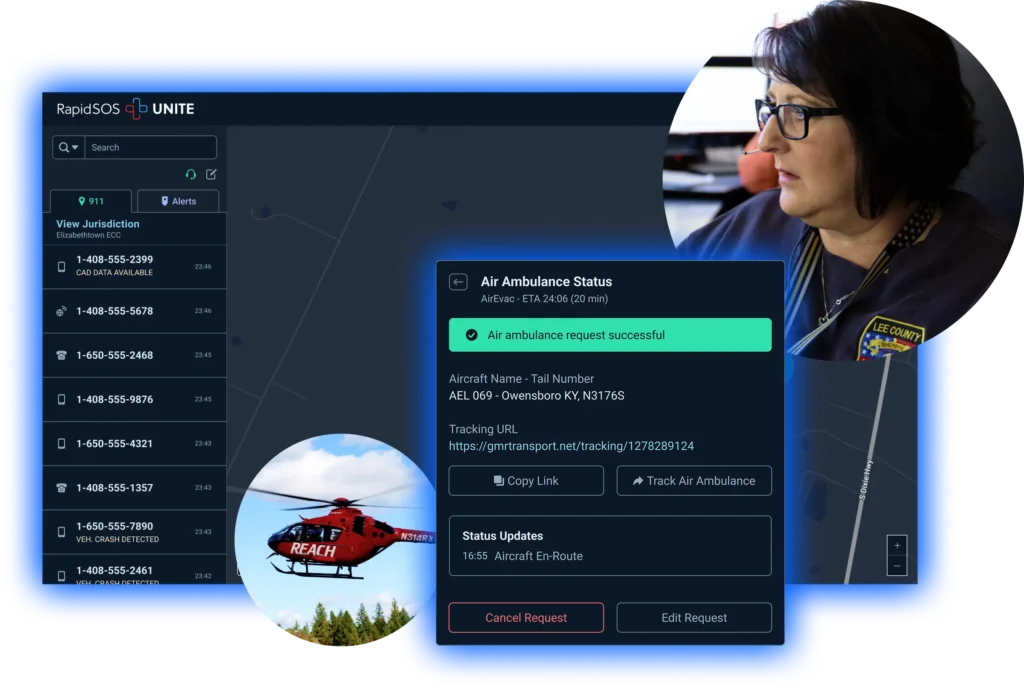
The new workflow, however, is seamless and empowering. As Paul describes, “With just a few clicks, telecommunicators can request an air ambulance, instantly share life-saving data, and see the unit’s real-time location. It means less time on the phone, more accurate information flow, and a shared view between the ECC and GMR teams. That’s a game-changer when every second counts.” This ability to manage the entire process from a single screen frees up telecommunicators to focus on their primary mission: helping the human on the other end of the line.
The real-world impact of this new workflow is most visible in its ability to save precious time and eliminate potential errors. Before the integration, dispatchers often had to use two different software systems—one for 911 calls and another for air ambulance requests. This would force them to manually cross-reference location pins and transfer crucial information, a process that was particularly challenging in rural areas.
With the GMR integration into RapidSOS UNITE, this inefficiency is gone. Now, when a call comes in, the dispatcher sees a precise pinpoint location on a single screen. With a single click on a helicopter icon, they can launch an air ambulance request. The accurate location data is instantly and seamlessly transferred to GMR’s team, ensuring that the helicopter is sent to the exact right spot. This allows dispatchers to manage police and EMS teams simultaneously, dramatically reducing response times and improving patient outcomes.

- Launch a Digital Request: Emergency Communication Centers (ECCs) can launch a request directly from their console without making a separate phone call.
- Share Life-Saving Data: Critical information is instantly shared with the air ambulance team, streamlining the process.
- Track the Aircraft in Real-Time: Dispatchers can view the aircraft’s location and estimated time of arrival (ETA) on a map.
Coordinate with Field Responders: The real-time tracking link can be shared with on-scene emergency responders via text or email to ensure everyone is on the same page.
The value of this streamlined workflow was dramatically proven in a life-saving call from Jefferson County, Illinois. A woman had crashed her car off Interstate 57, and due to conflicting reports, her exact location was unknown. Using the RapidSOS system’s pinpoint mapping, the dispatcher determined her precise location and, with a quick click, launched an air ambulance.

Because of the speed of the new system, a helicopter was already circling the scene by the time first responders arrived. The helicopter pilot was able to provide visual confirmation of the incident, giving ground units crucial information. The interstate was closed, the air ambulance landed, and the woman was transported to a trauma center in St. Louis. As Jason McIlrath noted, “The helicopter had a very short response time. They were able to close the interstate and get the bird on the ground and get her transported.” This swift action dramatically improved her chances of survival, demonstrating the power of a seamless digital workflow in saving lives when every second counts.
The decision to partner with RapidSOS was strategic for Global Medical Response. As GMR’s Senior Vice President of Innovation and Growth, Jeffrey McCollom, explains, the goal was to “take some of the solutions that we had developed and get them quickly out into the market.” With RapidSOS’s UNITE solution embedded in so many Emergency Communication Centers (ECCs) across the country, it was a natural fit. Jeffrey emphasizes that this partnership is about more than just technology; it’s about a shared culture.
Jeffrey sees the integration as a profound step towards solving a national challenge. With GMR’s vast network of over 500 air medical aircraft, the solution’s impact can be felt nationwide. This partnership, he believes, will “transform exactly how care is supported in rural communities,” making it easier to order air transport and more predictable to deploy assets. The result is a system that benefits not just GMR’s operations, but most importantly, the patients and communities they serve. “You eliminate the barrier to use and you also increase the utilization of the services,” Jeffrey explains, highlighting the business value in a way that directly ties to saving lives.
The journey to this integration began in a small dispatch center in Jefferson County, Illinois, where a dispatcher suggested the idea of connecting two vital systems. We’re incredibly grateful for the innovative spirit and partnership of Jason and Haley from the Jefferson County Sheriff’s Office. Their hands-on experience and feedback were invaluable in helping us build technology that makes a real difference in the field.