

School safety isn’t just about metal detectors or security guards anymore. It’s about how quickly and effectively we can protect students, educators, and staff when a crisis hits, safeguarding the innocent lives who deserve to learn and grow in peace. For too long, a dangerous gap has existed between when emergencies happen and when responders truly understand the situation. A frantic 911 call tells responders something is wrong, but often crucial details may be missing: what’s happening, where the danger is, or how many people need help. In those critical first minutes, this information gap can mean the difference between chaos and the most effective coordinated response.
The good news? Today’s AI-powered safety systems and connected cameras are finally closing that gap, making schools safer than ever.
We traditionally relied on people to spot threats and trigger alerts. But what if technology could see what human eyes might miss? What if artificial intelligence could identify dangers and instantly alert authorities faster than any person?
Companies like ZeroEyes have developed AI systems that detect firearms in security camera feeds, sending alerts to 911 and law enforcement within seconds. These aren’t just concepts; they’re deployed systems already making a real difference in schools.
When these AI-powered detection systems integrate with platforms like RapidSOS, something remarkable happens: the moment a threat is identified, emergency communication centers receive instant alerts with precise location data.
No more waiting for someone to call 911. No more precious seconds lost in confusion. The technology itself triggers action by first responders faster than ever before.

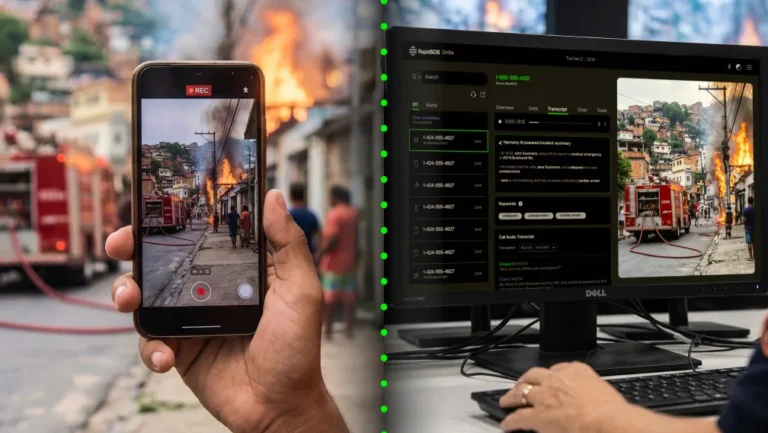
Here’s where it gets truly impactful. Through partnerships with companies like Eagle Eye Networks, school security cameras can now stream live video directly to Emergency Communication Centers (ECCs) and Real-Time Crime Centers (RTCCs) during emergencies, giving them the ability to access cameras for a more complete picture of what’s happening. Instead of dispatchers taking a panicked call and trying to piece together what’s happening, they have visual access to help them understand the situation.

Dispatchers can see precisely where the threat is, how many people might be affected, and what resources need to be deployed by sharing this information, images, and critical data directly with officers in the field – even while they’re en route to the scene. It’s like giving emergency services X-ray vision into crisis situations. This real-time visual intelligence doesn’t just speed up response times; it significantly improves the quality of the response. When officers arrive on scene, they’re not walking into the unknown; they’re stepping into a situation they’ve already been monitoring and preparing for.
Today’s schools are vibrant ecosystems of connected technology. Security cameras, access control systems, panic buttons, fire alarms, PA systems – each traditionally operated in isolation. But when these systems connect through platforms like RapidSOS, they become a much more powerful, comprehensive safety network that functions and responds as one.
When an emergency strikes, this connected infrastructure can automatically:
- Lock or unlock doors based on the type of threat.
- Display evacuation routes on digital screens.
- Send targeted alerts to specific areas of the building.
- Share occupancy data so responders know where people are located.
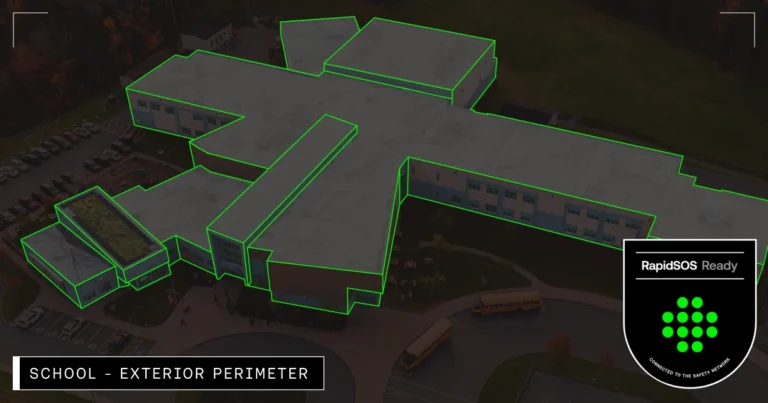
- Provide real-time floor plans with threat locations marked.
- Provide communication pathways directly from the Emergency Communications Center to the school.
It’s no longer just about individual tools; it’s about intelligent coordination between multiple systems working in perfect harmony, surfacing the necessary information to 911 at that critical moment in time.
School emergencies can overwhelm traditional communication systems. Phone networks get jammed, internet connections slow down, and usual ways of calling for help might not work. This is where the engineering strength of next-generation 911 technologies becomes apparent.
If voice calls can’t get through, data can still flow through redundant channels. Location information from mobile devices, medical data from personal devices , alerts from panic buttons and connected devices – all of this continues to reach 911 dispatchers even when traditional systems are overloaded or experiencing an outage . It’s like having multiple backup generators for emergency communications, ensuring help can always find its way to those who need it.
School emergencies often require coordination between multiple emergency communication centers and agencies. A threat at a school near city boundaries might need both local police and county sheriff response, or a medical emergency could require coordination between fire, EMS, and hospital systems.
This is where RapidSOS UNITE’s advanced coordination features become game-changing. Through Agency Share and Chat, emergency communication centers can instantly share call data, images, video feeds, and critical information with other ECCs during active emergencies. Instead of time-consuming phone calls between dispatchers trying to relay complex information, they can share real-time intelligence directly through the platform.

Even more powerful is Multi Agency Routing, which allows ECCs to pre-arrange automatic notifications to other emergency centers when specific types of incidents occur. For example, an ECC can configure the system so that any Active Assailant threat automatically notifies not just the ECC that covers that school, , but it can also notify nearby ECCs that will can dispatch resources based on the jurisdiction’s pre-plans, mutual-aid agreements, and available resources —all simultaneously, with the same real-time data and video access.
This means that instead of sequential notification chains that eat up precious time, multiple agencies receive the same critical intelligence simultaneously, allowing for truly coordinated response planning from the moment an incident is detected.
The advancements don’t stop at the ECC. Through mobile integration, field responders can receive all of this real-time intelligence; for example, officers can see building layouts on their tablets, firefighters get occupancy data on their mobile devices, and EMS personnel access medical information for specific individuals.

This means that by the time first responders arrive on scene, they’re not just responding to an emergency; they’re executing a coordinated response plan based on real-time intelligence gathered from multiple connected systems.
What we’re seeing is the coming together of multiple technological advancements: artificial intelligence, real-time data streaming, connected devices, mobile computing, and advanced communication networks. When these technologies work together through platforms like RapidSOS, they create something genuinely impactful.
More than a dozen school safety technology partners have already integrated with RapidSOS, and school districts nationwide are seeing significant improvements in their emergency response capabilities. This isn’t just progress; it’s a complete rethinking of what school safety can be.
The numbers speak for themselves: response times measured in seconds rather than minutes, situational awareness that begins before first responders leave the station, and coordination between multiple agencies that eliminates confusion and maximizes effectiveness.
But beyond the metrics, there’s something more important: confidence. Students, teachers, parents, and communities can have confidence that if an emergency occurs, the response will be faster, smarter, and more coordinated than ever before.
We envision a future where parents and teachers receive real-time updates and specific instructions in the event of school safety threats— and we’re working towards delivering this for our communities. First responders see coordinated response protocols that align with what the school is already doing. Everyone stays informed, and no one is left guessing.

As students return to classrooms this fall, they’re entering schools that are fundamentally safer than they were just a few years ago. Not because of higher fences or more security guards, but because of intelligent technology that can detect threats, communicate instantly with emergency services, and coordinate responses with unprecedented speed and precision.
At RapidSOS, we’re not just building technology; we’re creating a future where schools can focus on what they do best: nurturing young minds and building strong communities. When safety is powered by intelligence, learning can flourish without fear.