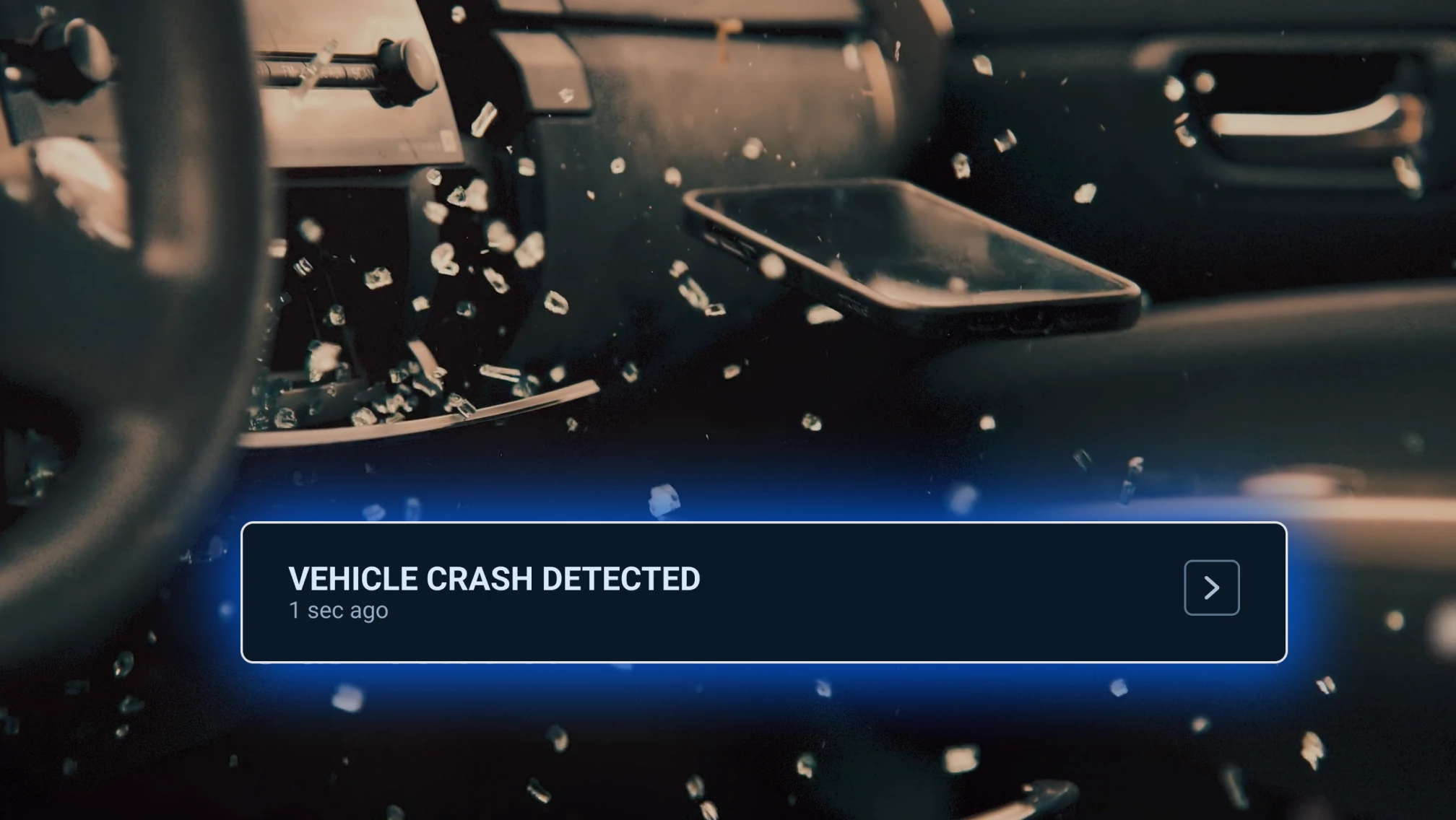

When a truck veered off a quiet road in rural Michigan with no witnesses and no human-initiated 911 call, one thing made the difference between tragedy and survival: data. Thirteen seconds after Dispatcher Janie Myers saw a crash alert flash across her RapidSOS screen, she dispatched a full emergency response.
That speed was possible because the device in that truck, powered by one of our crash detection partners, connected directly into the RapidSOS Safety Network, delivering precise GPS coordinates and critical context in real time. This moment in Cass County wasn’t luck. It was the result of enterprises choosing to connect their life-saving data to public safety. And it’s changing what “response time” means.
How Enterprise Data Made Cass County’s 13-Second Rescue Possible
Enterprise data is crucial for public safety because emergency teams cannot act on data they don’t have. Historically, 911 relied on callers to verbally relay location and other details, often leading to delays and errors. Even though connected devices (like modern vehicle telematics systems) capture critical, life-saving information, such as precise GPS coordinates or crash severity, this data often remains siloed from first responders’ direct workflow.
When enterprises (such as automakers, telematics service providers, or wearables) connect crash detection data to the RapidSOS network, it becomes actionable intelligence for call-takers and responders.
The rescue in Cass County, Michigan, is a compelling example of what happens when technology and people align. A truck veered off a quiet rural road with no witnesses and no human-initiated 911 call. In this moment, the enterprise data provided essential information that saved a life:
- Precise crash location alongside an unfrequented rural roadway
- A silent line that still communicated the need for emergency escalation
- Situational awareness for responders to prepare before arrival
- A coordinated multi-agency response in minutes due to unified information
Thirteen seconds. One life saved. Because a device knew something was wrong, and the data reached the right hands instantly. We are immensely grateful for the variety of enterprise partners who choose to connect their life-saving data to public safety through the RapidSOS Safety Network.
In the following sections, we highlight just two examples (of many) showing how this critical contextual data is transforming emergency response for citizens and commercial fleets alike.
SiriusXM Connect: Eliminating the Data Gap Between Car and 911
SiriusXM Connect’s mission is to create meaningful, safety-forward connections between people, vehicles, and the world around them. Their ACN+ crash detection system collects high-value telematics data, including impact force, airbag deployment, seatbelt status, and more.
Before partnering with RapidSOS, much of this information had to be relayed verbally through intermediaries, introducing delays and potential errors. The implementation of the RapidSOS integration fundamentally altered this dynamic. When SiriusXM confirms a crash, data is now transmitted directly to 911 within seconds, achieving GPS-level precision.
This data transfer has proven life-saving: on August 27, 2021, when 17-year-old Jake skidded off a road and was rendered unconscious in a rural field after dark, his car’s ACN+ sensors detected the crash and alerted SiriusXM Connect. When specialists received no response, the emergency data (including precise location) was delivered directly to first responders, enabling them to locate Jake and get him to a trauma unit quickly. His medical team confirmed that without the automatic crash notification, he would not have survived.
The notifications we receive from SiriusXM Connect through RapidSOS don’t bounce off cell towers; they come to us directly. The data reaches us almost instantly… there are no mistakes.
No guesswork. No repeated coordinates. No precious seconds lost.
Motive: When Fleets Can Reach 911 Faster, Lives Change
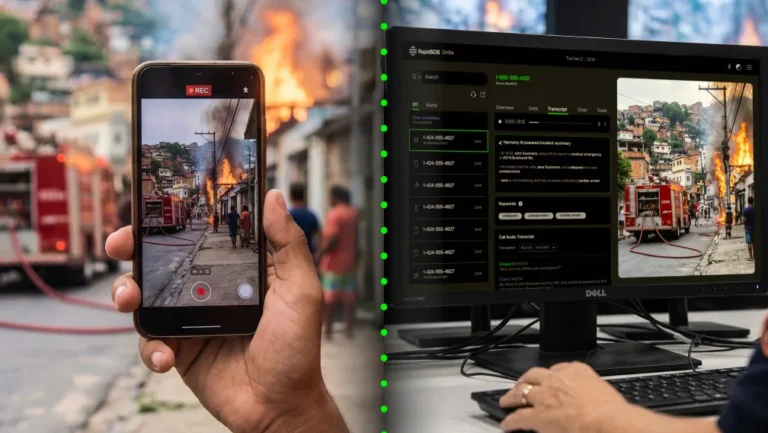
For fleets, a severe collision doesn’t just disrupt operations — it’s a moment when every second can change the outcome. Before Motive’s First Responder feature, safety teams often knew when something was wrong but had no direct way to reach local 911 centers or to quickly share critical details on behalf of their drivers.
For United Vision Logistics (UVL), that all changed the day a truck rolled over after implementing Motive First Responder powered by RapidSOS UNITE.
When Safety Becomes a Strength
When Motive’s AI detected the collision, it immediately surfaced everything the safety team needed:
- The exact GPS location
- Collision severity
- Driver identity and contact information
- Video evidence
And because of the integration with RapidSOS, they also had something they’d never had before: a priority connection to the correct 911 center — and a way to share life-saving data instantly.
Within moments, UVL confirmed the driver’s condition and connected directly to emergency services. While the safety manager spoke with the dispatcher, essential collision data — location, timing, context — was already available to first responders, allowing them to send the right resources without delay or repeated questions.
The impact was immediate:
Clearer intel → faster deployment → a safer outcome for the driver.
As UVL’s Chief Legal Officer describes:
Everything — accident location, GPS coordinates, video, driver information — was right there. It saved time and allowed us to deploy the necessary resources to secure the scene.
This is not only about safety. It’s about reducing risk, increasing accountability, and protecting drivers at scale.
Safer Together: The Value of Enterprise Participation in Public Safety
Integrating with the RapidSOS Safety Network is both a public safety initiative – and delivering tangible business value and competitive advantage by transforming data into actionable, life-saving intelligence. The Cass County rescue and similar stories demonstrate that faster response leads to better business outcomes.
The Data Exchange: Information Shared, Value Gained
When enterprises connect their life-saving data to public safety through the RapidSOS Safety Network, they move beyond basic location and provide contextual intelligence that accelerates emergency response and delivers clear business value.
- Sharing Precise GPS Coordinates: The instant delivery of GPS-level precision, often from a crash detection partner, eliminates the need for verbal relay and guesswork
- Value Gained: Allows first responders to reach the scene faster and without error, directly supporting Risk Reduction and saving lives.
- Sharing Crash Severity & Contextual Data: Data like impact force, airbag deployment, seatbelt status, and collision severity provides situational awareness before arrival.
- Value Gained: Enables call-takers and first responders to dispatch the correct resources immediately (e.g., air ambulance vs. fire rescue), which improves operational efficiency and reduces vehicle downtime.
- Sharing Driver/User Identity & Contact Information: Providing driver identity and contact details, and in some cases, video evidence, helps confirm the incident and the need for escalation.
- Value Gained: Accelerates scene management, provides peace of mind to customers, and enhances safety credibility & consumer trust.
The Types of Information & Business Benefits of RapidSOS Integration
Safety Credibility & Consumer Trust
Your technology becomes a meaningfully life-saving asset that customers recognize and choose.
Impact on Enterprise: Differentiate your platform and enhance brand perception, giving customers peace of mind.
Risk Reduction & Liability
Faster, more accurate emergency response reduces the severity of injuries and limits potential liability from major incidents.
Impact on Enterprise: Reduce costs associated with accidents, insurance claims, and legal exposure.
Operational Efficiency
Eliminates the need for manual, error-prone calling, providing clearer, faster communication with first responders.
Impact on Enterprise: Improve fleet safety and reduce vehicle downtime by accelerating scene management.
Nationwide Scale
Gain instant access to a solution used by public safety agencies that cover 99.9% of U.S. population.
Impact on Enterprise: Maximize reach and ensure a consistent, high-quality safety feature across all operations.
Specific Industry Advantages
- Vehicle Telematics: Integration differentiates the platform with integrated crash response, improving fleet safety, reducing downtime, and increasing customer retention by providing faster, automated emergency response
- Automotive OEMs (Original Equipment Manufacturers): Advanced safety features meet regulations and enhance brand perception, giving drivers and passengers peace of mind with immediate emergency response.
- Insurance Providers: Real-time, verified crash data can enhance claims processing and fraud detection, reducing costs while providing policyholders with faster, more accurate claims resolution and improved trust.
- Last-Mile & Delivery / Fleets: Automated crash detection workflows protect drivers, reducing downtime, and enhancing safety, trust, and retention for the workforce.
- Ridesharing Apps: Real-time crash detection and emergency escalation increase driver and rider confidence, ensuring faster response times and immediate support.
- Autonomous Vehicles: Automated crash response helps boost public trust and regulatory compliance, ensuring safer, more reliable operations for passengers and logistics clients.
Ultimately, integrating with RapidSOS ensures that an enterprise’s life-saving data reaches the right hands instantly. This enables public safety to save lives that would otherwise be lost, creating a powerful story of corporate responsibility and safety innovation, as demonstrated in Cass County.